



Wi-Fi 8
Enabling low-latency and reliable wireless connectivity
IEEE 802.11bn (Wi-Fi 8) is the next-generation wireless LAN standard, currently being developed to deliver more reliable wireless communications, especially in environments susceptible to congestion and interference.
The standard focuses on improving effective throughput, reducing latency, and minimizing packet loss. Building on the use of the 6 GHz band introduced with IEEE 802.11ax (Wi-Fi 6E) and the advanced IEEE 802.11be (Wi-Fi 7) technologies such as channel bandwidths of up to 320 MHz and 4096QAM, IEEE 802.11bn introduces enhancements to facilitate Ultra High Reliability (UHR). The IEEE 802.11bn task group has established performance targets that include a 25% increase in throughput, a 25% reduction in 95th-percentile latency, and a 25% reduction in MAC Protocol Data Unit (MPDU) loss relative to IEEE 802.11be Extremely High Throughput (EHT) operation under given conditions.
Challenges Facing IEEE 802.11bn (Wi-Fi 8) Device Development
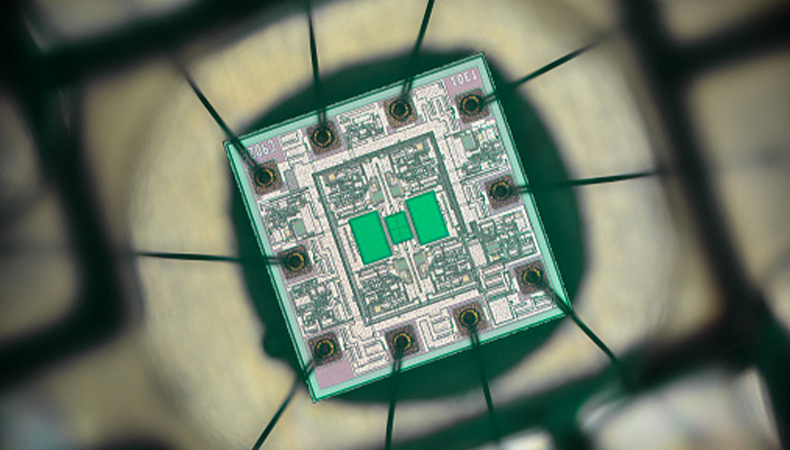
Challenge: Establishing an RF Evaluation Environment During Standard Development
Although the IEEE 802.11bn standard has yet to be finalized, manufacturers are already developing chipsets and devices. Development teams need to evaluate prototypes before the standard is finalized and then use those evaluation results to improve their designs. However, updates to the draft specification may introduce changes to test conditions and test items. If the test environment cannot adapt to these changes, it becomes difficult to properly evaluate and verify prototype performance. This can lead to interruptions in design verification, reconfiguration of test conditions, and additional measurements, potentially impacting design decisions and slowing the transition to the next stage of development.
Therefore, IEEE 802.11bn device development requires a flexible test environment that supports fundamental RF performance evaluation from the prototype stage and enables continuous testing as standardization progresses.
IEEE 802.11bn (Wi-Fi 8) Test Solutions
Solution: An IEEE 802.11bn RF Performance Evaluation Environment Supporting Ongoing Standardization
The Wireless Connectivity Test Set (WLAN/Bluetooth® Tester) MT8862A provides an RF test environment for evaluating the transmit and receive performance of IEEE 802.11bn devices.
Supporting the 2.4, 5, and 6 GHz bands as well as channel bandwidths of up to 320 MHz, the MT8862A enables the evaluation of key RF parameters, including transmit power, spectrum characteristics, center frequency, error vector magnitude (EVM), and receiver sensitivity. This allows developers to begin RF verification as soon as prototype devices become available, without having to wait for final standard ratification.
Measurement results can be fed back into design optimization and subsequent prototype iterations, helping engineers identify RF performance issues earlier in the development cycle and continue design verification while standardization progresses.
The MT8862A also supports software upgrades that extend existing IEEE 802.11ax and IEEE 802.11be test environments for IEEE 802.11bn RF performance evaluation. By reusing these existing test configurations, control environments, and measurement procedures, engineers can minimize the effort required to transition to IEEE 802.11bn.
The Bluetooth® word mark and logos are registered trademarks owned by Bluetooth SIG, Inc. and any use of such marks by Anritsu is under license.

Resources

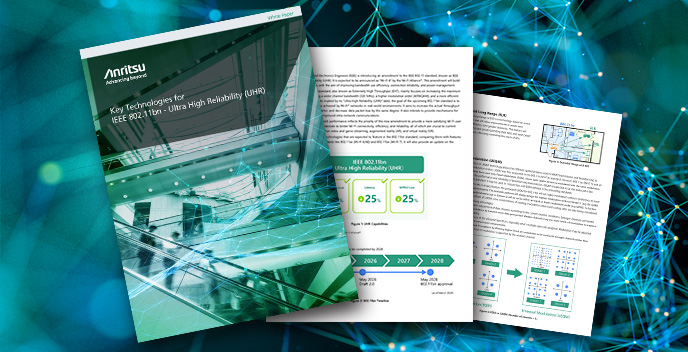
White Paper:
Key Technologies for IEEE 802.11bn - Ultra High Reliability (UHR)
IEEE 802.11bn (Wi-Fi 8) is the next-gen wireless LAN standard with Ultra High Reliability. This white paper highlights key technologies for real-time apps like HD video and AR/VR.
Related Products
Related Links




Contact Us



Copyright 2026