



Ethernet
Communication standards supporting network services
Ethernet is a widely used communication standard that is commonly used to link computers, servers in data centers, and optical networks, and is also being adopted for in-vehicle networks. To keep up with the rapid increase in data traffic caused by recent developments in artificial intelligence (AI) and machine learning (ML), the development of Ethernet to increase data transmission speeds to 400G, 800G, and 1.6T is underway, in addition to increasing the communication speed between the modules and chips used to configure Ethernet devices.
Ethernet Challenges in R&D
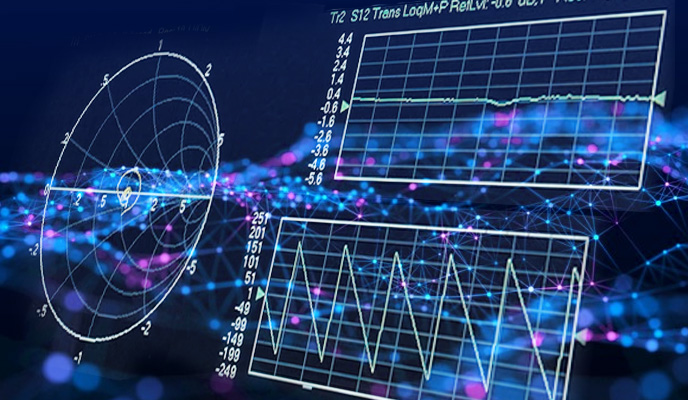
As the transmission speed of electrical and optical signals increases, the operating frequency bandwidth of transmission lines becomes wider. Therefore, the evaluation of transmission lines including printed circuit board wiring, connectors, and cables is necessary to determine the transmission characteristics for higher frequencies. There is also a parameter known as the “Channel Operating Margin (COM)” that considers noise received from multiple transmission lines. Evaluating this parameter requires the measurement of the reflection and transmission characteristics (S-parameters) of the transmission lines.
In electrical interfaces, waveform shaping using an equalizer is essential to suppress waveform degradation due to the frequency characteristics of the transmission line. For waveform shaping, a test engineer must determine the optimal equalizer coefficients at the receiver side to minimize symbol errors.
Waveform shaping with an equalizer is also necessary for the transmitter and receiver testing of Ethernet equipment, including the printed circuit boards and connectors.

Ethernet Test Solutions in R&D
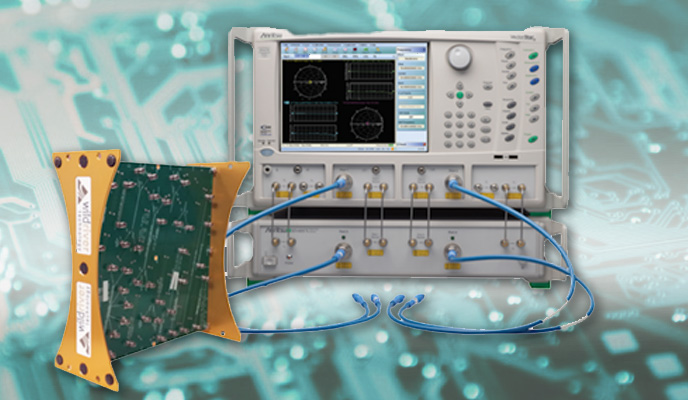
Solution 1: Evaluation of Transmission Line Characteristics
A vector network analyzer (VNA) is useful for measuring the frequency characteristics of a transmission line.
Anritsu offers a four-port VNA that supports the frequency range required for 400GBASE.
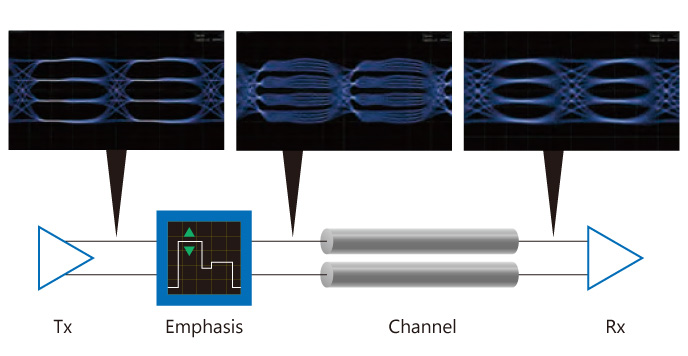
Solution 2: Determine Optimal Equalizer Coefficients
The emphasis function of the pulse pattern generator (PPG) performs equalization processing to shape the receiver input waveform.
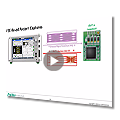
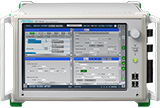
Anritsu's Signal Quality Analyzer MP1900A can find the optimal equalizer coefficients to minimize symbol errors at the receiver.
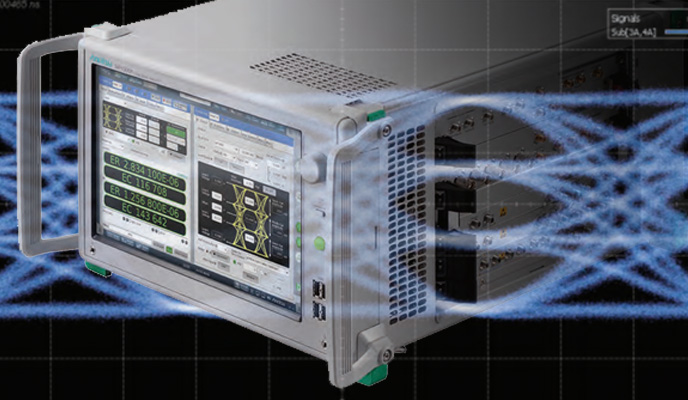
Solution 3: Transmitter/Receiver Testing
Transmitter testing uses the oscilloscope to characterize the linearity, amplitude, eye width, jitter, and other properties of the signal waveforms output from an Ethernet device.
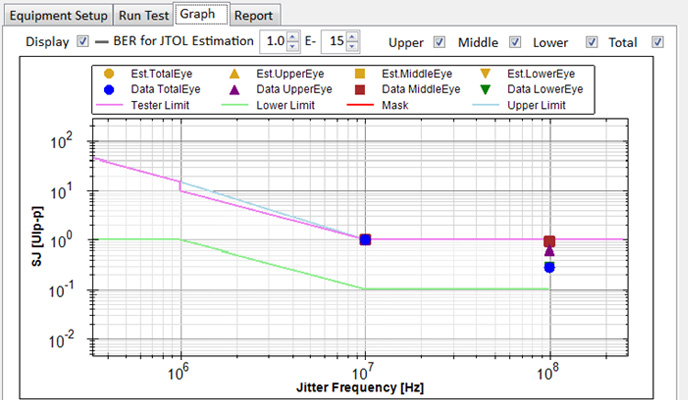
In receiver tests, the MP1900A's PPG and Error Rate Detector (ED) are used to measure jitter tolerance by measuring the symbol error rate while applying stress such as jitter to the electrical signal.
Leaflets:
Case Study
Qualitas Semiconductor Co., Ltd.
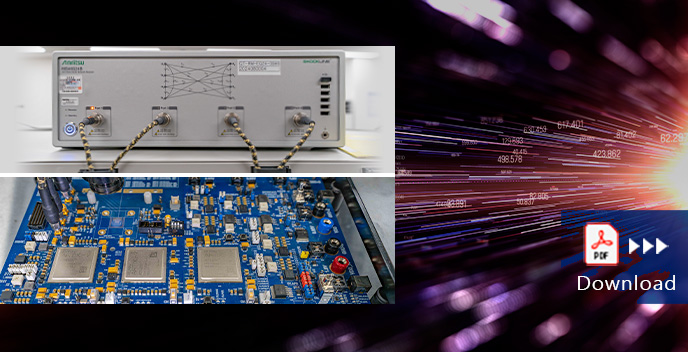
A leading company in high-speed interconnect IP development enhanced its verification capabilities and development efficiency by leveraging Anritsu’s vector network analyzer.
Resources





Related Products


Contact Us


Copyright 2026