



Passive Optical Networks
Realizing access networks to which a large number of users can connect
What is PON?
A PON (Passive Optical Network) is an optical fiber network that transfers data from one Optical Line Terminal (OLT) to many Optical Network Units via an optical splitter. Fiber To The X (FTTx) networks use optical fiber to connect subscribers directly to the service provider or CATV operator, and the PON widens the FTTx area coverage. Additionally, PON usage by Radio Access Networks (RAN) is growing.
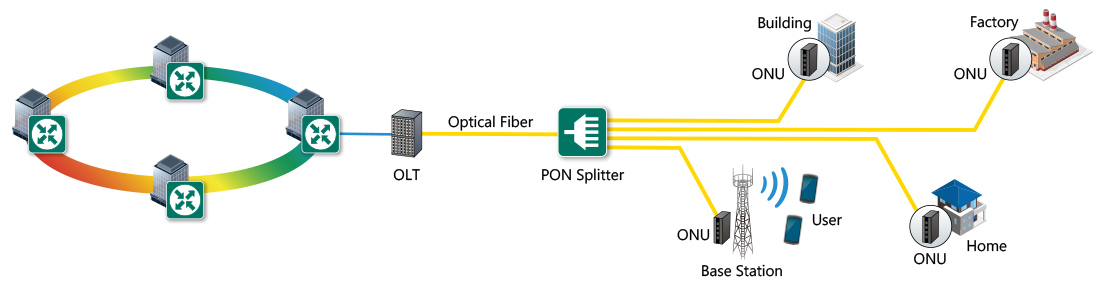
Types of PON Service
ITU-T and IEEE standardize PON specifications. PON services differ depending on the up and down transfer speeds, optical wavelength, bandwidth, etc. Current PON specifications use the 10G-EPON (IEEE)/XGS-PON (ITU-T) standards with a transmission speed of 10 Gbit/s. Additionally, the ITU-T has already standardized NG-PON2 with a 40 Gbit/s transmission speed by combining wavelength-division multiplexing (WDM) and time-division multiplexing (TDM); ITU-T also promotes the 50G-PON standard. On the other hand, the 25GS-PON MSA Group promotes the 25G-PON standard.
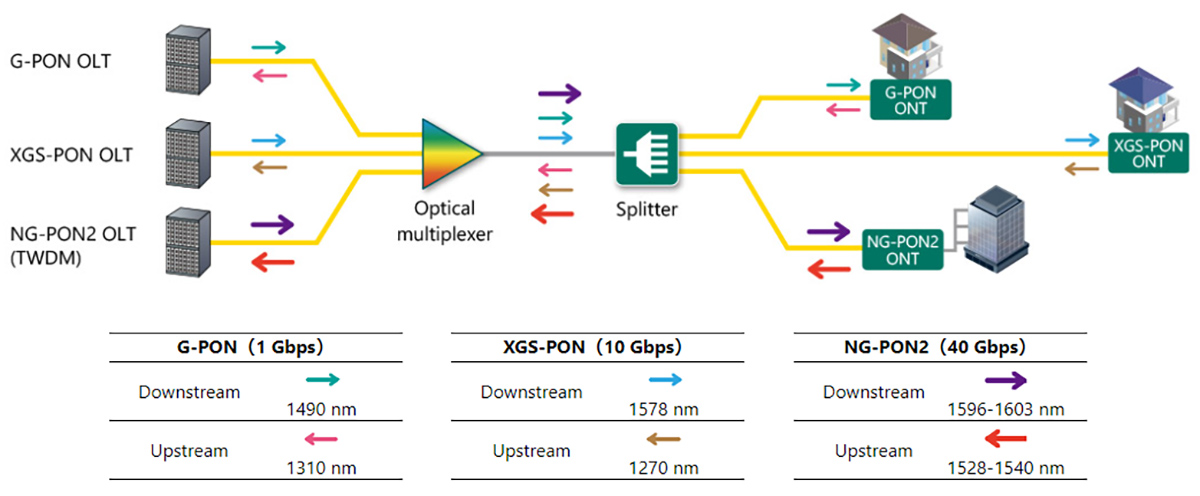
Challenges in PON I&M
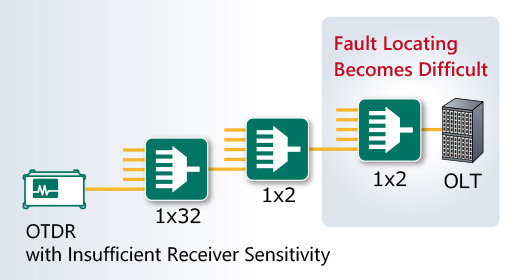
Challenge 1 Difficulties Locating Optical Fiber Network Faults
Next-generation PON networks will split the optical signal into 128 ways. However, the power of each split optical signal decreases as the number of split signals increases. If contractors use an OTDR with insufficient receiver sensitivity for network installation and maintenance (I&M), faults cannot be detected appropriately at End-To-End testing, which risks missing problems that might disrupt communications. Moreover, testing at optical fiber repeaters and multiple locations on the fiber network increases costs.

Challenge 2 Rapid Growth in PON I&M
Due to the rapid growth in PON I&M, the workload of engineers increase, requiring better work efficiencies by service providers and contractors. This rapid growth also requires the need for more experienced engineers in test equipment operation however, training inexperienced engineers quickly can be difficult.
Anritsu PON Test Solutions
Solution 1
End-to-End Troubleshooting of Next-Generation PON with Network Master Pro and Access Master
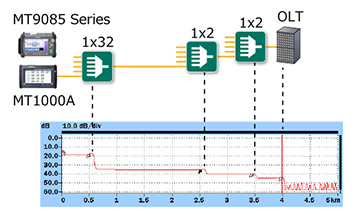
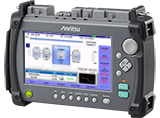
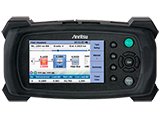
With their high receiver sensitivity (dynamic range), the Network Master Pro and Access Master are ideal for detecting end-to-end faults in next-generation PON including 128-way optical splitters to cut network operators’ and contractors’ PON I&M costs and prevent missed fault detection).
Solution 2
Efficient Testing with Network Master Pro Automated Test and Remote Operation Functions
The following three functions facilitate efficient testing and fast engineer training.

Scenario-Based Testing displays operation help guides and automates test pass/fail evaluation, which increases work efficiency, shorten test times and cuts training costs.
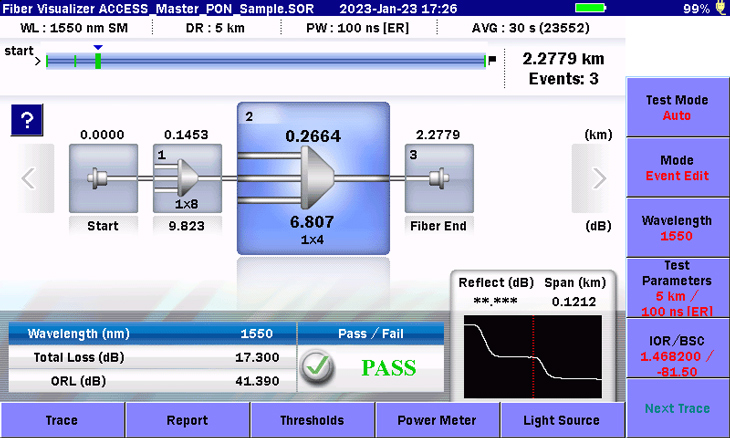
The Fiber Visualizer function detects the location of events such as optical splitters, optical connectors, and faults automatically and displays them on the GUI as easily recognized symbolic icons. As a result, even engineers without OTDR test experience can easily troubleshoot optical network faults.
Resources
Application Note:
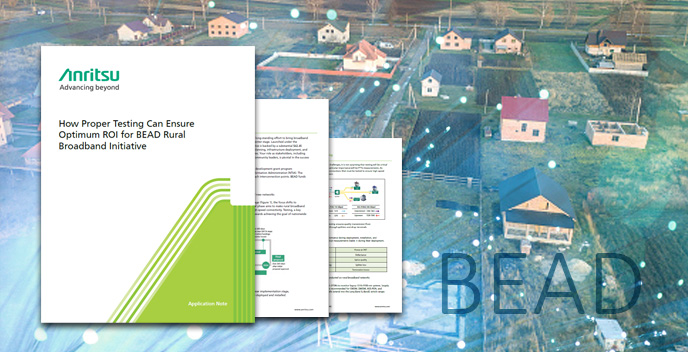
How Proper Testing Can Ensure Optimum ROI for BEAD Rural Broadband Initiative
For BEAD program implementation, understanding the focal points on last mile and middle mile of broadband network is important.
Application Note:
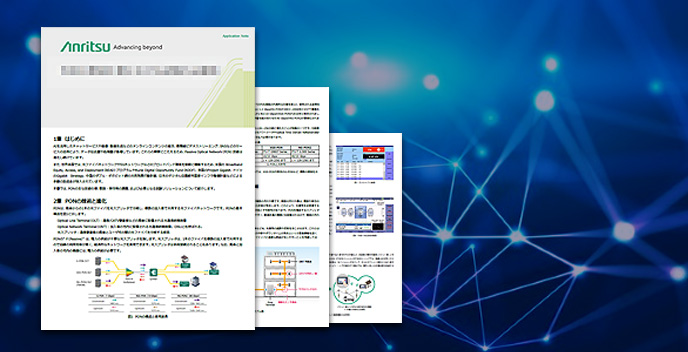
Necessity of Testing in PON Installation
Explains the specifications of PON technology, possible troubles and issues in PON Networks, and the suitable testing solutions to solve the testing challenges.

White Paper:
Understanding OTDRs
This paper describes fundamental knowledge about an optical time domain reflectometer (OTDR), such as operation mechanism, various technical specifications, how to use an OTDR, and notices in an OTDR use case.


Related Products

Contact Us



 Your Privacy Choices
Copyright 2026