



Base Station Installation & Maintenance
Providing reliable radio access networks
Installation and the upgrading of base stations are underway to expand to 5G coverage. To ensure stable communication between a base station and connect with the stability of mobile devices, it is necessary to check radio communication performance and eliminate radio wave whether or not radio interference and other obstacles when installing the base station exists.
Challenges for Base Station Installation and Maintenance
Challenge 1: Performance Check at Installation
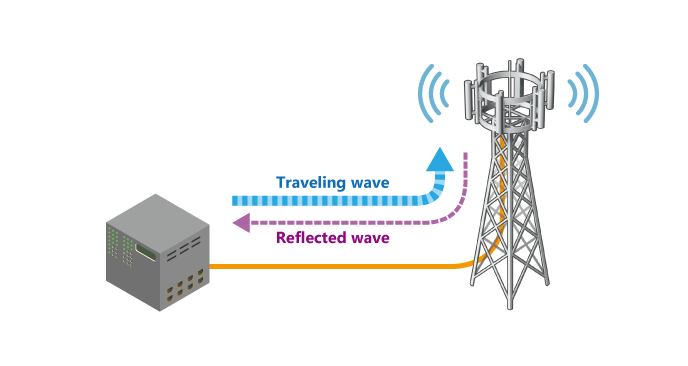
When a base station is constructed, an antenna is mounted on a steel tower and connected to a radio unit using a cable. If the cable has enormous transmission loss or the reflected waves from the antenna, connector, or other components are large, the efficiency of communication with mobile devices decreases, potentially making it difficult to provide an adequate level of service in the designed area.
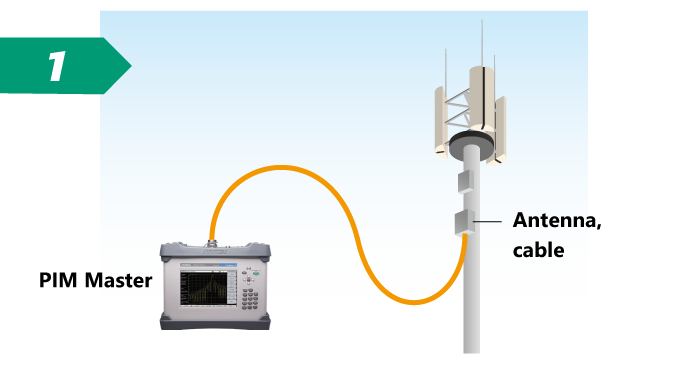
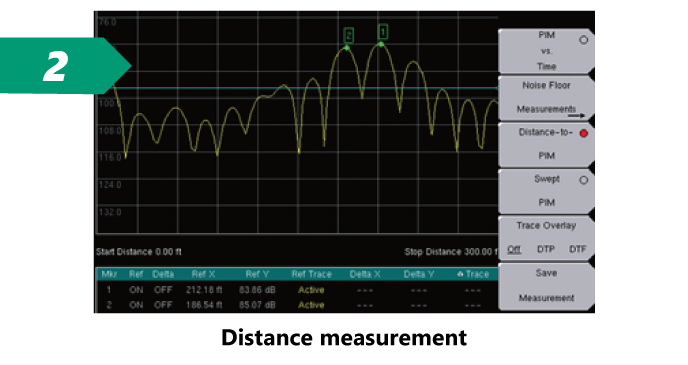
Also, the radio waves transmitted from the base station cause passive intermodulation (PIM). If PIM interferes with the receiving frequency band, it may affect the reception of mobile device signals by the base station, which can make it difficult to provide an adequate level of service.
Challenge 2: Influence of Interference
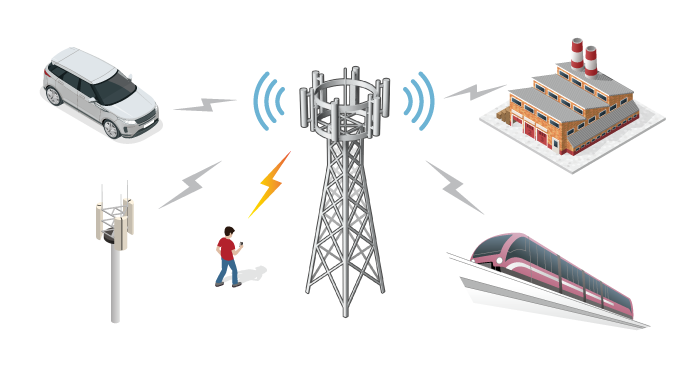
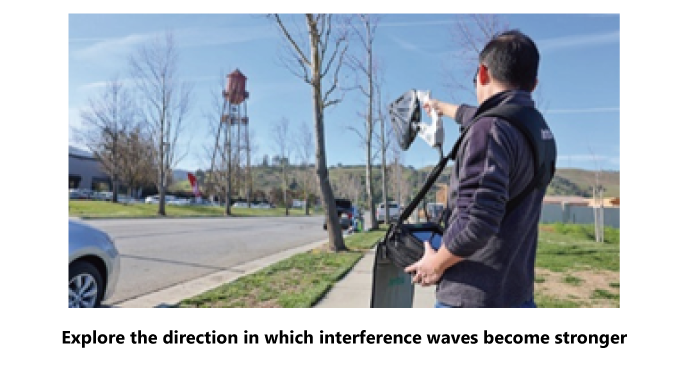
In addition to cellular phones, services using wireless technology are available in a variety of locations, including government organizations, transportation systems, factories, and offices. The communication speed for mobile devices may decline or the communication may get interrupted as the radio waves used by these services interfere with the mobile communication environment. Before taking a countermeasure for interference waves, therefore, the source of interference needs to be identified.
Challenge 3: Network Performance Check
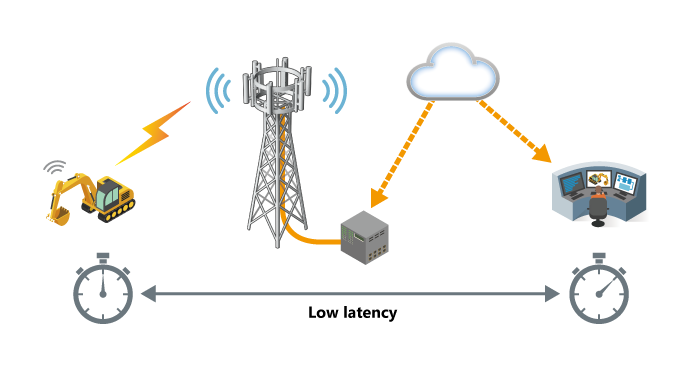
In applications like autonomous driving and remote machine control, importance is placed on the network performance such as time synchronization, high data throughput, and low latency.
Simple methods to evaluate throughput include measuring the response time using ping or the time of download from the server. Achieving low latency requires accurate measurement using a dedicated measuring instrument.
Solutions
Solution 1: Method for Verifying Performance During Installation
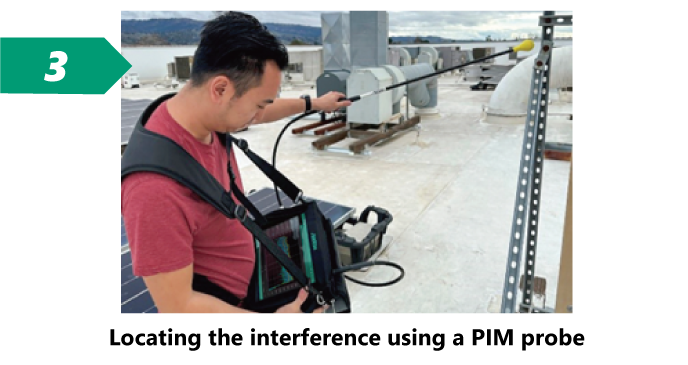
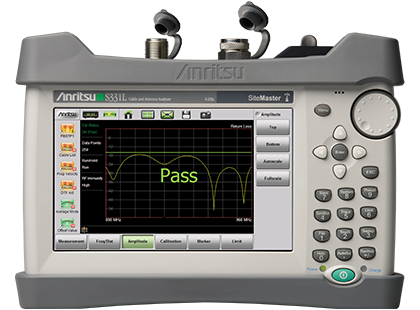
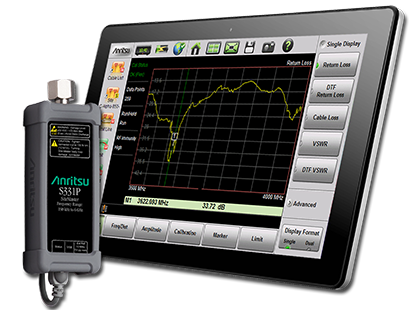
Anritsu’s Handheld Cable and Antenna Analyzers or Vector Network Analyzers, Site Master, can evaluate losses from cables and connectors as well as return loss caused by reflections from antennas, which should be considered during base station installation. If the Voltage Standing Wave Ratio is high, it is possible to identify the distance to the reflection point.
In addition, Anritsu’s handheld PIM master can verify passive intermodulation that occurs in mobile base station antennas and cables.
Application Note:
Pinpointing Sources of PIM on Rooftop and Macro Cell Sites
White Paper:
Solution 2: Interference Hunting
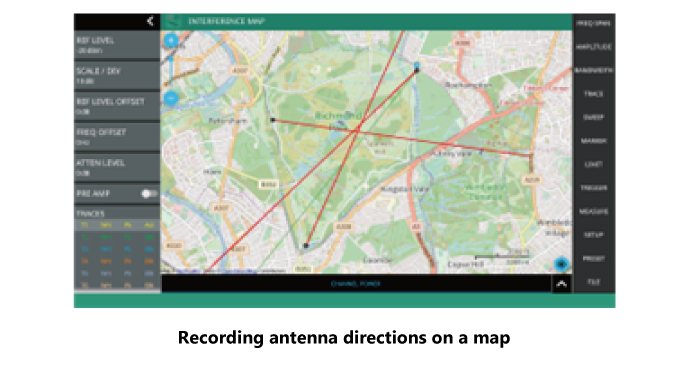
The use of a hand-held antenna and a spectrum analyzer is effective in estimating the location where interference waves are generated and identifying sources of interference. The Mobile Interference Hunting System is useful to map field strength.
Web:
Application Note:
Coverage Mapping with the Field Master Pro MS2090A Spectrum Analyzer
Solution 3: Measuring Network Latency and Time Synchronization
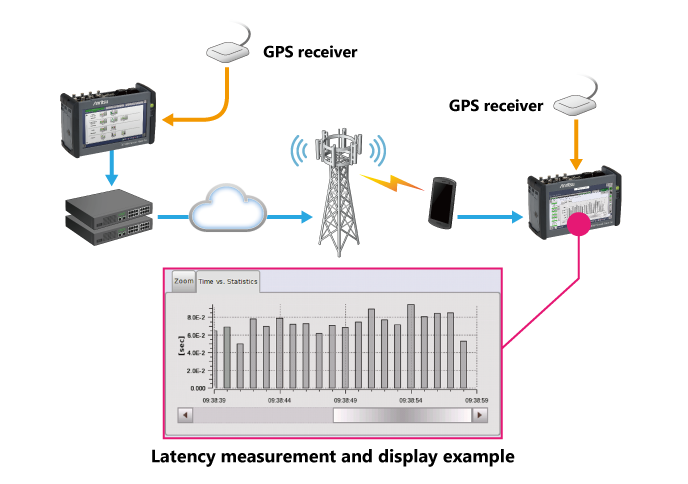
In realizing "low latency," a feature of 5G, the first thing to do is to precisely measure the one-way latency between two distant points using two measuring instruments.
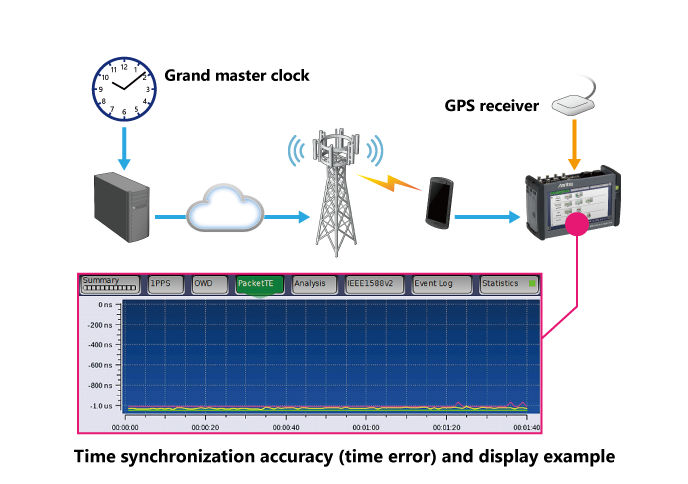
To synchronize the time between base stations among 5G networks, the Precision Time Protocol (PTP) is in common use, which periodically distributes time stamps from the grand master.
The Network Master Pro can measure the time synchronization accuracy of a mobile network (between base stations and between a base station and a mobile device) based on the time data received by a GPS receiver.
Video:
Resources


Related Products




Contact Us



 Your Privacy Choices
Copyright 2026