



6G Technology
Advancing society through further innovation
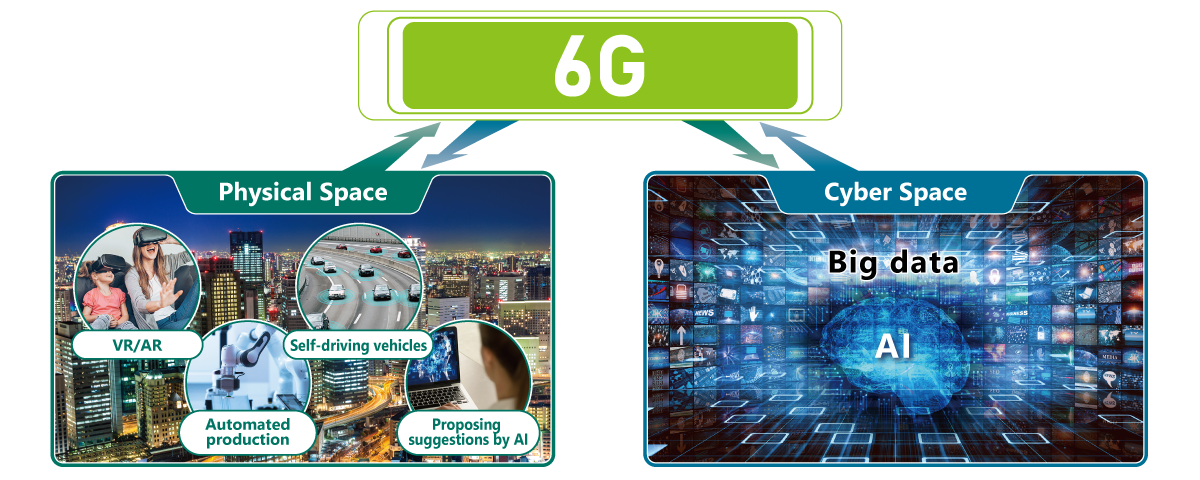
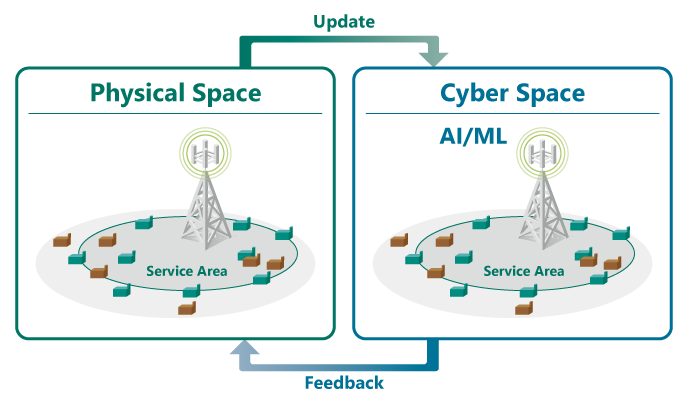
6G is the next-generation network that combines wireless, optical, Artificial Intelligence (AI), and other technologies to achieve high communication speeds, ultra-low latency, and high reliability far beyond 5G. With 6G, Cyber-Physical Systems (CPS) recreate field data acquired from sensors in virtual space, allowing for interaction between both realms. Its expected benefits will increase the ability to achieve future predictions by feeding back simulation results obtained in virtual space to real space.
Interview (PDF):
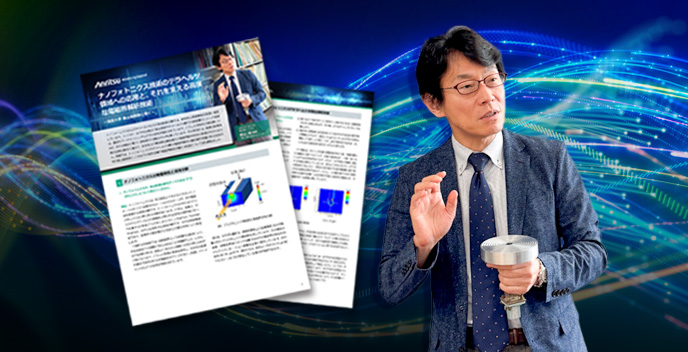
Synergy between Nanophotonics and Terahertz with Advanced Electromagnetic Field Analysis
– Interview with Professor Jun Shibayama, Hosei University –
Anritsu interviewed Prof. Jun Shibayama of Hosei University about the development of functional devices in both fields and cutting-edge research, such as the application of optical sensing technology to the terahertz domain.
Interview (PDF):
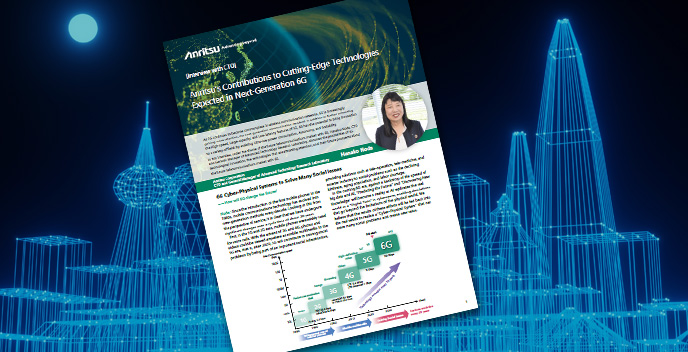
Anritsu's Contributions to Cutting-Edge Technologies Expected in Next-Generation 6G
– Interview with Anritsu CTO –
Introducing innovations, notable technologies, and Anritsu's contributions to Cutting-Edge technologies expected in Next-Generation 6G
Article (PDF):
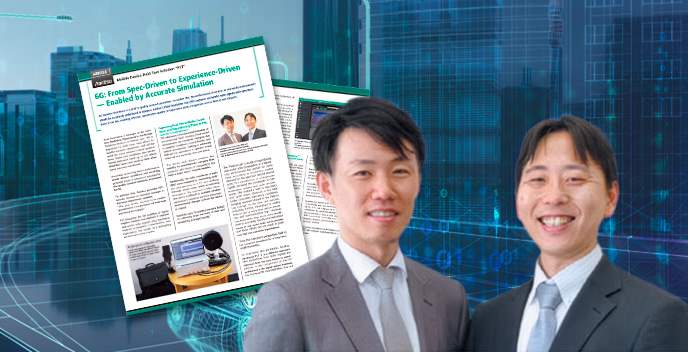
6G: From Spec-Driven to Experience-Driven — Enabled by Accurate Simulation
In 6G, evaluation is shifting toward a focus on user-perceived quality. However, real-world radio conditions constantly vary, making comparisons difficult. This article explains a method to evaluate the true performance of devices and chipsets by reproducing real-world signals in a lab using Field Simulation Test (FST).
White Paper:
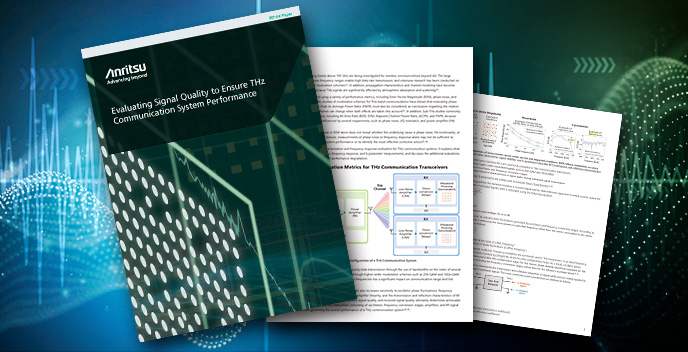
Evaluating Signal Quality to Ensure THz Communication System Performance
In THz communication systems, performance evaluation is essential for transceivers that support wideband signals and higher-order modulation schemes. However, when the expected communication performance cannot be achieved, identifying the root cause is often challenging.
This white paper explains the insights that can be obtained from EVM, phase noise, frequency response, and S-parameter measurements, and reviews the key evaluations required to identify the contributing factors.
White Paper:
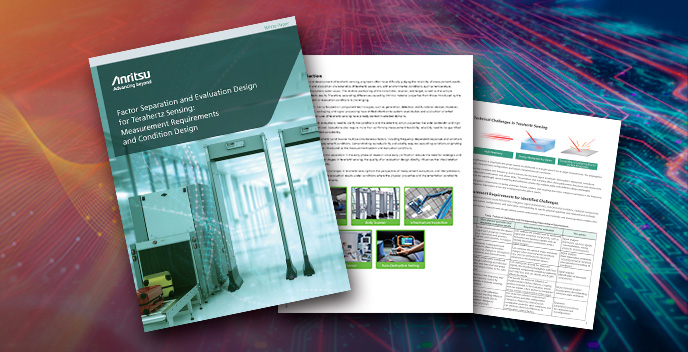
Factory Separation and Evaluation Design for Terahertz Sensing: Measurement Requirements and Condition Design
In R&D in this field, separating variability caused by the object itself from that introduced by measurement conditions and environmental factors remains a key challenge.
This white paper explains methods to isolate these factors and ensure reproducible evaluation in terahertz-band measurements, where environmental conditions, measurement systems, and signal characteristics strongly influence results.
White paper:
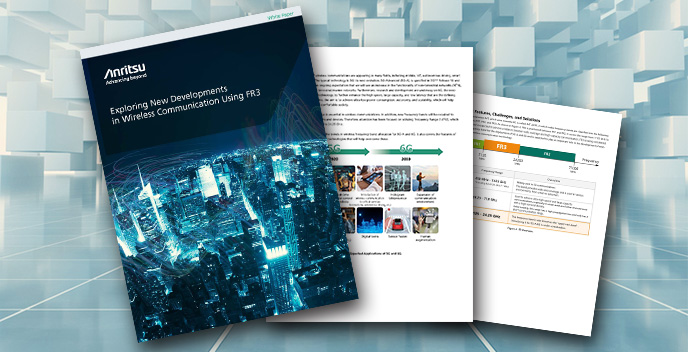
Exploring New Developments in Wireless Communication Using FR3
This white paper explains the features of Frequency Range 3 (FR3) for 6G, and the technologies that will help overcome its challenges.
Key Technologies for Wireless Communications Enabling 6G
Expansion of Radio Frequency Bandwidth
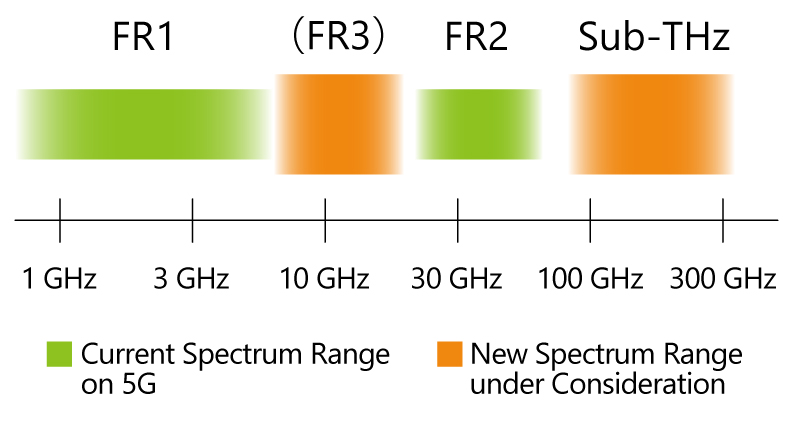
To meet the key requirements of 6G, which include ultra-high speed, large capacity, ultra-low latency, and ultra-massive connectivity, securing additional frequency bands is essential. Therefore, multiple research and development efforts are being conducted with the goal of utilizing the 7.125–24.25 GHz Frequency Range 3 (FR3) band and the 90–300 GHz sub-THz band. Among these frequency bands, the 7.125–16 GHz portion of FR3 has been listed as an agenda item at the World Radiocommunication Conferences (WRC) and is gaining significant global attention.
White paper:
Channel Sounding
Channel sounding is a method for measuring and analyzing the characteristics of radio propagation paths. FR3 and sub-THz radio waves are prone to absorption by the atmosphere and attenuation by obstacles. Furthermore, they are characterized by their high linearity. Therefore, understanding the propagation characteristics of these radio waves and reflecting them in network control, such as through beamforming and distributed cooperative MIMO, is essential to optimizing network operation.
White paper:

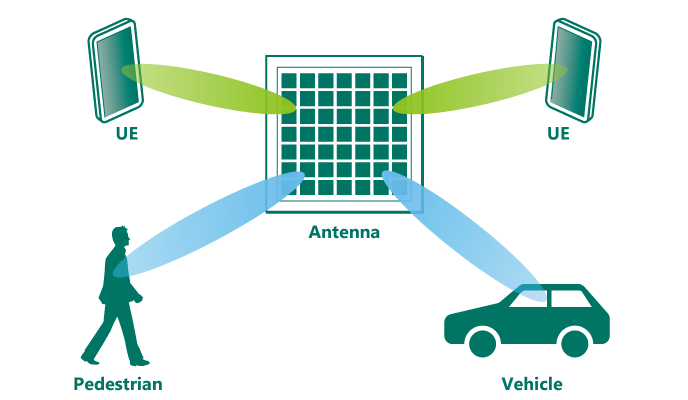
Integration of Sensors and Communications (ISAC)
The sharing of frequency bands for wireless communications with sensing is one of the technical requirements of 6G and is referred to as ISAC*1 or JCAS*2. The radio propagation characteristics obtained through sensing are expected to be utilized to establish a real-time understanding of the radio environment of 6G mobile networks and to enhance beamforming performance based on this understanding. Additionally, sensing/estimation data for characteristics such as human behavior, object shape, and speed are being considered for use in new applications such as advanced autonomous driving technology for vehicles, environmental sensing, and remote sensing.
Interview (PDF):
White paper:
*1: ISAC: Integrated sensing and communication
*2: JCAS: Joint communication and sensing
AI/ML and Communication
6G networks will incorporate AI/Machine Learning (ML) to enable the autonomous and rapid control of networks, the prediction and optimization of network resources, and power saving.
White paper:
Test Solutions for 6G Wireless Communications
Streamline RF Performance Evaluations of Emerging 6G Technologies
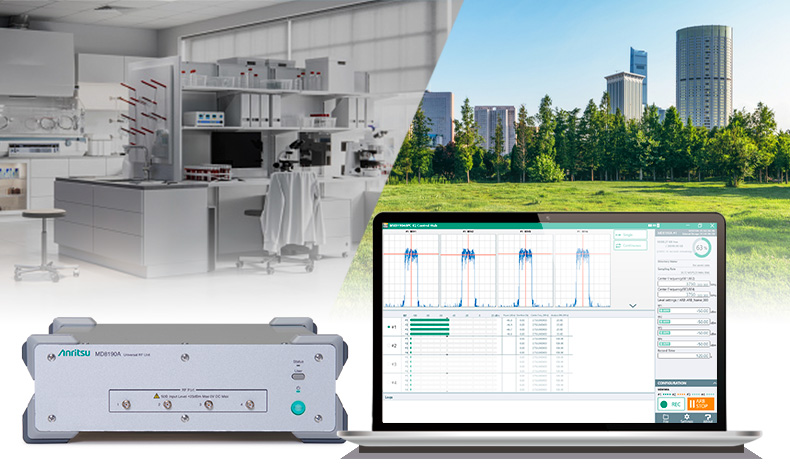
In 6G R&D, candidate wireless technologies under consideration for standardization often require repeated validations in real RF environments to assess their performance and feasibility. This is because a single evaluation rarely provides sufficient insight. Researchers use the results to refine signal processing schemes and design parameters. The updated designs are then verified in subsequent development stages. Unfortunately, laboratory and field evaluations often use different environments and equipment configurations. As a result, test conditions frequently need to be reconfigured, which prolongs evaluation cycles.
Anritsu's IQ Control Hub Software MX819040PC enables researchers to evaluate candidate wireless technologies in real RF environments using the same evaluation environment from the laboratory through field testing. This allows evaluation results to be fed directly into downstream design and verification processes. It also reduces the effort required to reconfigure test conditions and simplifies the comparison of candidate technologies and evaluation conditions. Researchers can therefore evaluate more candidate technologies within the same development period and gain insights into performance differences and technical limitations before key development decisions are made. This accelerates data collection for standardization proposals and supports faster technical decisions for product development.
Brochure:
Identify FR3 Deployment Challenges Through FR3 Readiness Assessments
FR3 has emerged as a promising frequency range that combines wide bandwidth with broader coverage. As research and development progress toward commercial deployment, demand for FR3 testing continues to grow.
At the same time, technical specifications and test requirements are still evolving. Additional instruments, hardware upgrades, or new test capabilities may be required as standards and evaluation methods are developed. Organizations also face uncertainty over whether their current FR3 test investments will remain relevant for future 6G research and development, making it challenging to justify investing in FR3 test infrastructure.
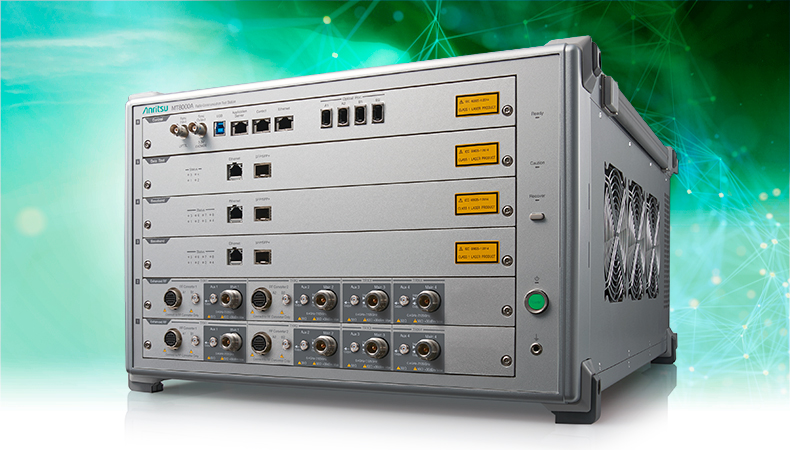
Anritsu offers an RF hardware option for the Radio Communication Test Station MT8000A that supports the 7.125–16 GHz band, which is part of FR3. This highly scalable option is designed to support future software upgrades for adding 6G-related features. Anritsu will continue to support customers' 6G R&D by expanding its support for 6G features.
Brochure:
Key Technologies for Wired Communications Enabling 6G

All-Photonics Networks and Photonics–Electronics Convergence Technologies
The CPS to be realized in 6G faces challenges of rapid increases in the volume of communications data and the power consumption by networks and data centers. To address these challenges, the use of an all-photonics network, which utilizes only optical signals for communication, is being considered. To implement this network, photonics-electronics convergence devices, which combine photonics and electronics technologies, are being developed for communication devices and modules.
Interview (PDF):
Application Note:
Space Division Multiplexing (SDM) Technology
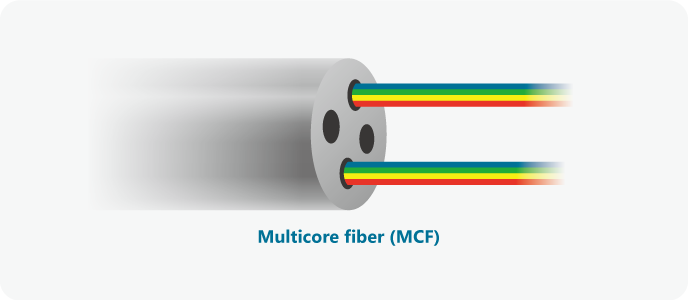
Current optical networks present a bottleneck, in that single-core optical fibers have a maximum transmission capacity of around 100 Tbps. To overcome this limitation and dramatically increase the capacity of optical fibers, Space Division Multiplexing (SDM) technologies are being developed and considered for implementation in next-generation submarine optical networks and optical interconnects.
One promising SDM technology is Multicore Fiber (MCF), which densely packs multiple optical transmission paths into a single fiber. This approach draws inspiration from the MIMO techniques used in wireless communications.
Anritsu is active in the area of basic research for the Beyond 5G/6G fields with our cutting-edge testing solutions, as we strive to establish core technologies that embody our slogan "Original & High Level". We have been instrumental in the early commercialization of test solutions that support our partners' development processes, contributing to the advancement of society alongside our partners.
Case Study
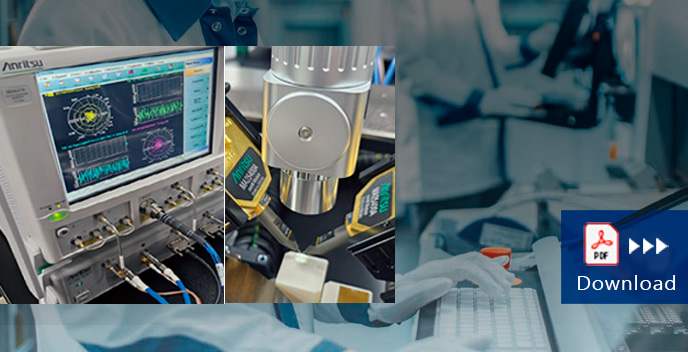
Electronics and Telecommunications Research Institute (ETRI)
mmWave and sub-THz device evaluation: A leading research institute in next-generation communications and semiconductor technologies established a broadband on-wafer measurement platform using a VNA.
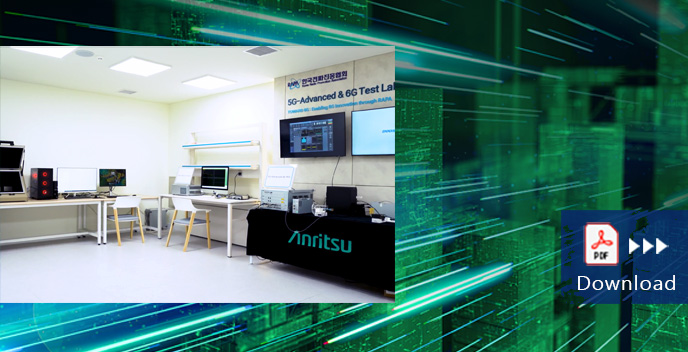
Korea Radio Promotion Association
Korea Radio Promotion Association (RAPA) and Anritsu collaborate to accelerate 6G telecommunication technologies, sparking industry-wide innovation by revolutionary advancement
Video:
Anritsu’s Contributions to 6G
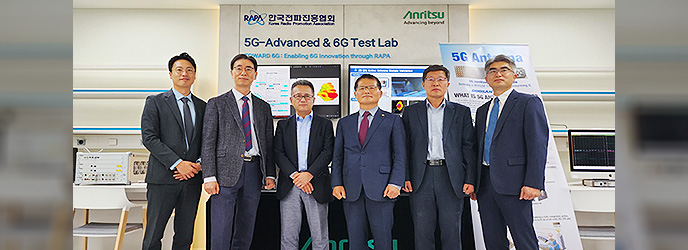
RAPA Establishes Anritsu 5G-Advanced & 6G Test Lab
The Korea Radio Promotion Association (RAPA) has opened the Anritsu 5G-Advanced & 6G Test Lab, equipped with state-of-the-art facilities, based on a Memorandum of Understanding (MoU) with Anritsu for collaboration in 5G-Advanced/6G.

Anritsu Collaborates with Industry Leaders to Demonstrate Key Non-Terrestrial Network Use Cases
Anritsu conducted joint verification to demonstrate the effectiveness of automotive safety technologies and ecosystems in 3GPP-compliant NTN use cases. Using Anritsu’s Network Master Pro MT1000A and Virtual Network Master, Anritsu with industry leaders evaluated emergency message transmissions over NTN as well as end-to-end latency and reliability.
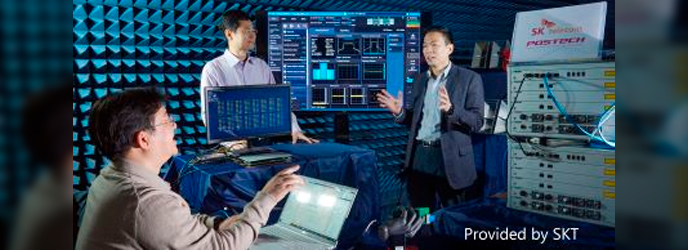
Anritsu’s Test Solutions Contribute to Enhanced Communication Performance by Combining SK Telecom and POSTECH’s Antenna Expansion Technologies with AI
Anritsu’s Radio Communication Test Station MT8000A was selected for joint verification by SK Telecom and POSTECH in Korea with the aim of enhancing mobile communication performance by integrating AI with advanced antenna expansion technologies.
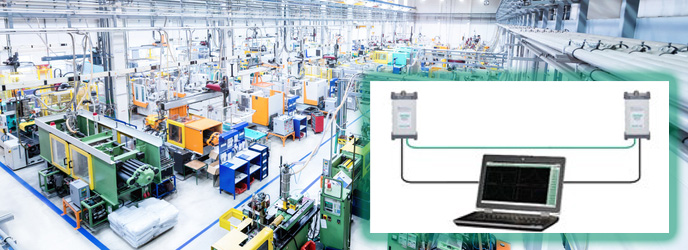
Anritsu Extends 6G Research Together with a university in Denmark
In collaboration with a university in Denmark, Anritsu has developed new techniques for channel sounding and communication channel sensing in the frequency bands being considered for 6G.
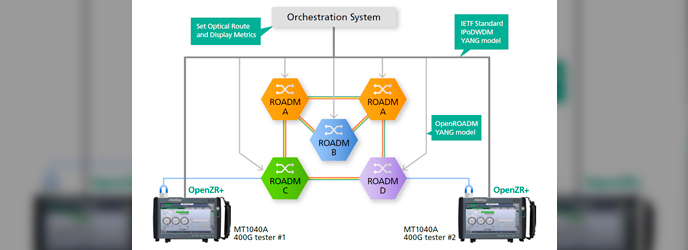
OFC 2025: Anritsu, in Collaboration with the University of Texas at Dallas, Exhibits OpenROADM MSA-Compliant Data Center Interconnection Control and Communication Quality Monitoring
Anritsu showcased efficient testing and the monitoring of data center networks comprising equipment from multiple vendors using the Network Master Pro MT1040A.
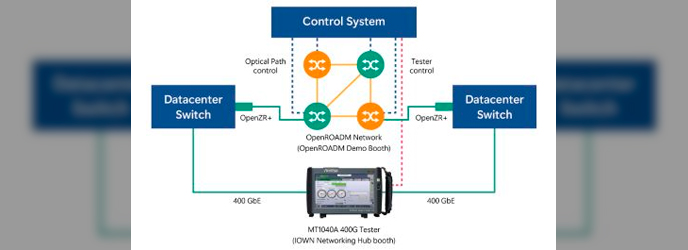
Anritsu to Highlight Innovative Testing Solutions Supporting Emerging High-speed Designs at OFC 2025
Anritsu presented a live demonstration of the latest optical testing technology using the Network Master Pro MT1040A for an end-to-end display across an Open ROADM-compliant data center network.
Resources






Related Products
Amazon Web Services and AWS are registered trademarks of Amazon.com, Inc. or its affiliates.
Contact Us



 Your Privacy Choices
Copyright 2026