



Data Center Interconnect
Testing solutions for data center interconnect
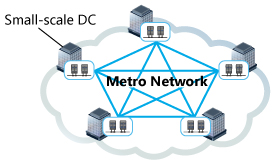
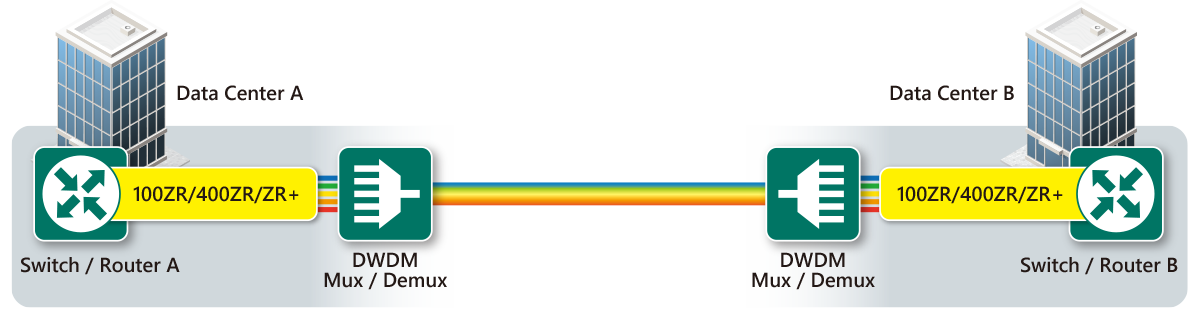
With the widespread adoption of AI and cloud services, data traffic volumes are increasing dramatically. Therefore, operators need to increase the speed and capacity of their Data Center (DC) networks. Furthermore, more and more distributed data centers are coming online, where multiple geographically dispersed data centers are linked together to enhance service quality and improve fault tolerance. Taken together, this gives rise to a need for large-volume, high-speed data synchronization, backup, and load balancing between DCs. Meanwhile, for Data Center Interconnects (DCIs), there is a strong demand for a means of reducing operational costs while also expanding communication capacity to accommodate future traffic increases. In response to these requirements, DCI is increasingly introducing pluggable coherent technologies such as 100ZR/400ZR/ZR+, which enable flexible network construction according to the transmission distance and required transmission signal bandwidth.
White Paper:
Advantage of 400ZR Deployment for Data Center Interconnects
This white paper explains the market trends that have led to the development of 400ZR, the main technical specifications, and the benefits of introducing 400ZR to data center interconnects.
Market Trends in Data Center
Pluggable coherent technologies such as 100ZR, 400ZR, and ZR+ are expected to reduce deployment costs for DC operators because they do not require the installation of WDM systems that include transponders. However, DC operators become responsible for ensuring continued high levels of performance as they are required to maintain WDM components with these optical transceiver technologies.
Poster:
400G Ethernet Physical Layer
These are the key technologies and major specifications of IEEE802.3 400GBASE-R Ethernet, OIF's 400ZR, and OpenZR+ (400ZR+).
Testing Challenges in 100ZR/400ZR/ZR+ Deployment
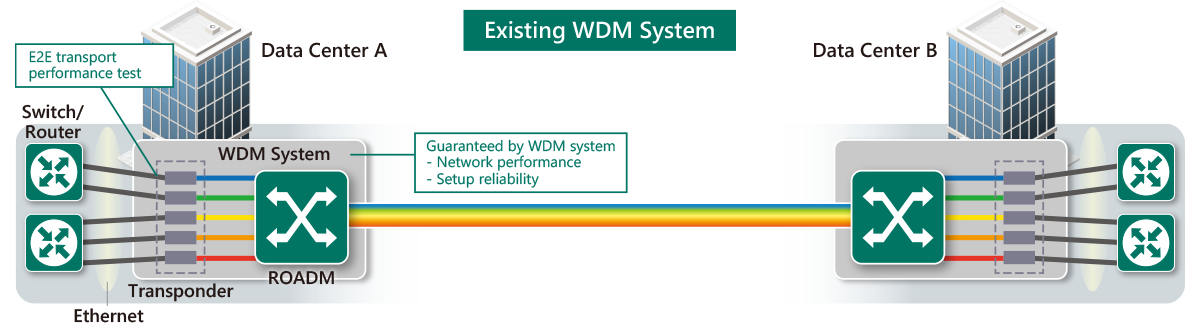
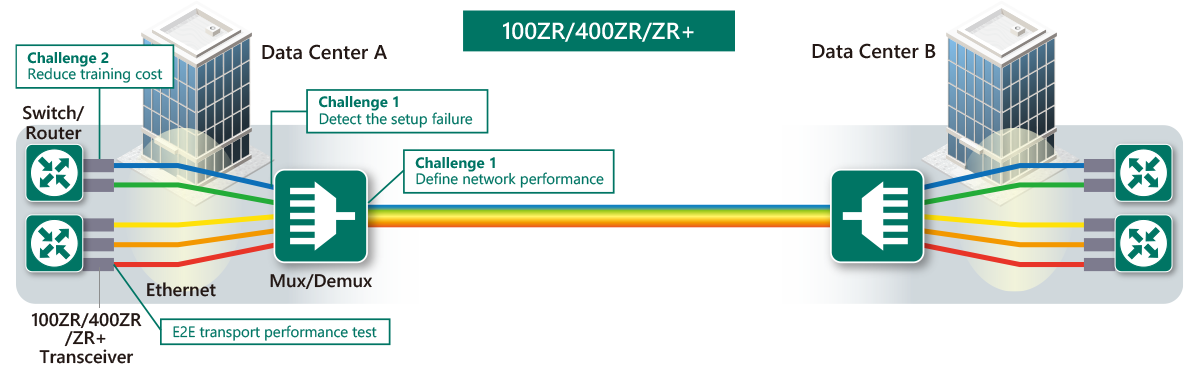
Challenge 1: Establishment of a system whereby DC operators can guarantee the performance of 100ZR/400ZR/ZR+
Since 100ZR/400ZR/ZR+ pluggable coherent is based on open technical specifications such as OIF, operators need to verify the performance to ensure interoperability between different vendors. The transceivers and network devices provided by multiple vendors must work together seamlessly to ensure the desired level of communication quality. Furthermore, DC operators must guarantee the signal quality of the optical transceivers and related equipment they incorporate into their networks. Network requirements and the quality of services offered vary depending on the operator, while it is necessary to consider future increases in traffic and responses to new services. This calls for a testing solution that can flexibly accommodate these needs. It is also necessary to evaluate the communication quality, such as Bit Error Rate (BER), latency, and Ethernet frame loss.
Challenge 2: Efficiency and simplification of network verification
When introducing the 100ZR, 400ZR and ZR+, it is essential for DC operators to provide practical training to engineers unfamiliar with the measuring equipment and to establish standard test procedures that ensure highly reproducible evaluations, regardless of the operator. Operators need an educational program that not only promotes a thorough understanding of the measurement items and methods for quantitatively evaluating communication quality, but also covers equipment configuration and connection methods, as well as the correct interpretation of the measurement results.

Anritsu DCI Test Solutions
Solution 1: 400G and 100G testers help verify optical transceiver settings and ensure Ethernet communication quality
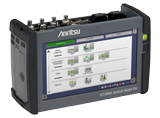
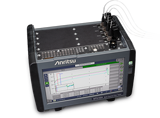
Anritsu Network Master Pro MT1040A is a test solution that supports the direct connection and testing of 100ZR, 400ZR, and ZR+ transceivers. The MT1000A also supports 100ZR transceivers, thus providing an optimal test environment for DCI construction and maintenance. By using the MT1040A and MT1000A, operators can not only measure the BER and transmitted/received frame count in conventional Ethernet tests, but also read the line quality monitor values (e.g., FEC error rate and optical signal-to-noise ratio) output by pluggable coherent optical transceivers. This is done in real time and visualized on a screen. With this system, operators can evaluate the communication quality of their entire network from different perspectives, from the physical layer to the L2/L3 layer.
White Paper:
OIF 400ZR Interoperability – OFC 2025 Plugfest
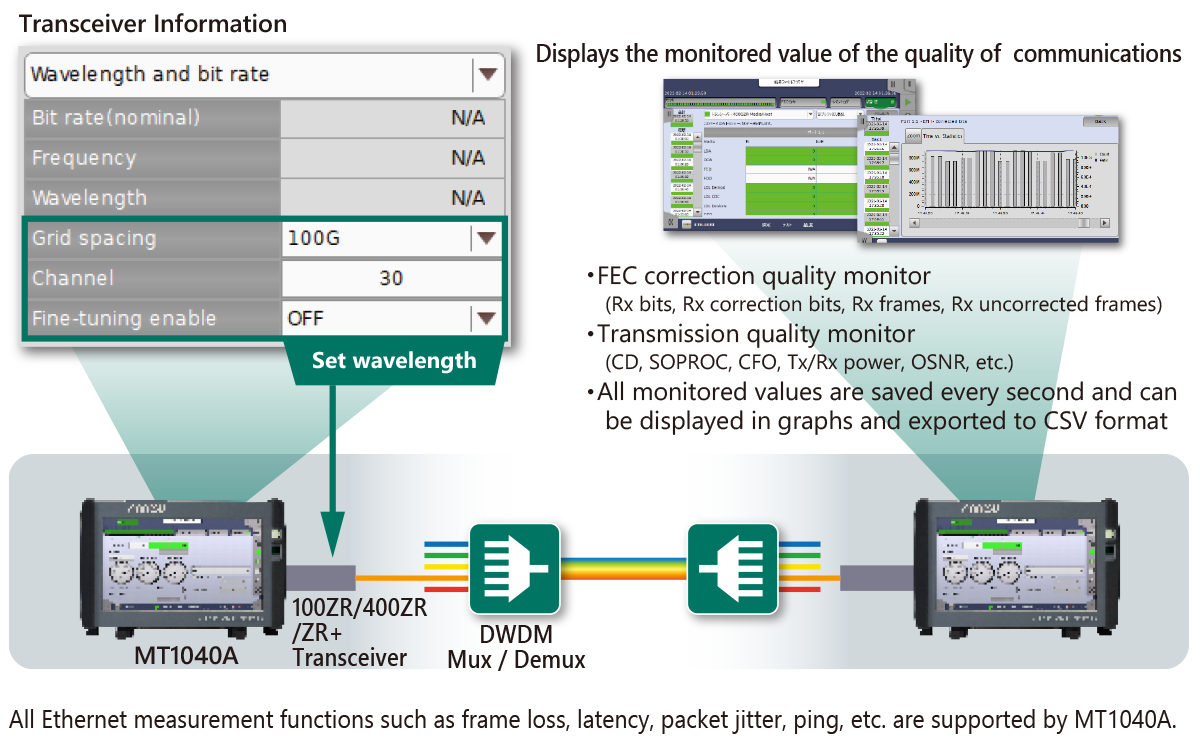
Solution 2: Efficient automated on-site testing using 400G Tester
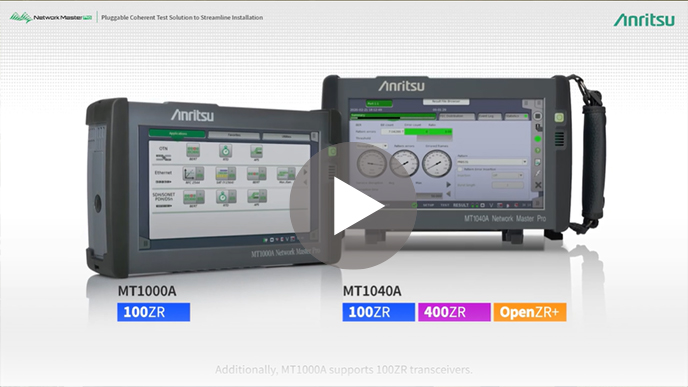
Anritsu offers the SEEK automated test environment for use with the MT1040A/MT1000A, which lets field workers easily perform complex test procedures. By using the SEEK test scenario, even engineers who do not normally operate measuring equipment can easily perform the necessary tests. The MT1040A screen displays the settings to be made. It provides guidance on how to make connections, so that users can master measurement procedures with minimal operational training and thus prevent measurement errors. This environment facilitates the automation of the initial operation and connection checks of pluggable coherent optical transceivers.
Video:
Network Master Pro MT1000A/MT1040A Automated Test Solution
This video provides further information on automated testing.
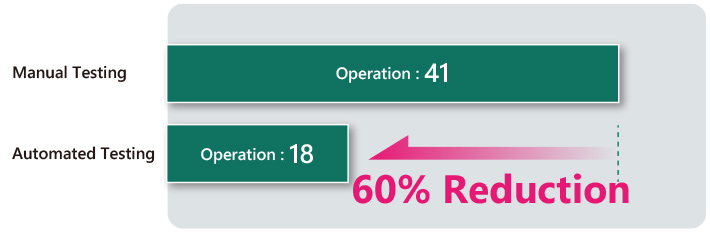
Using the automatic test scenario decreases the number of operations by 60% compared to manual testing.
In addition, using the test scenario facilitates accurate and efficient testing of 400ZR networks.
Resources


Article (PDF):
Accurately Evaluating Communication Environments, Including Cloud: Latency and Jitter Measurements, Using Virtual Testers
This article introduces a test solution for evaluating network communication quality, applicable to both virtual and cloud environments.
Related Links




Related Products

Contact Us



Copyright 2026