Accurate product inspection is one of the main factors behind the quality and safety of pharmaceutical
products. In this guide, we delve into the three most important inspection systems in pharmaceutical
manufacturing: metal detectors, X-ray systems, and checkweighers. We’ll explore how they work, how they
contribute to product safety, and the additional features they must have to comply with stringent FDA
(Food and Drug Administration) regulations.
Metal Detectors in Pharmaceutical Manufacturing
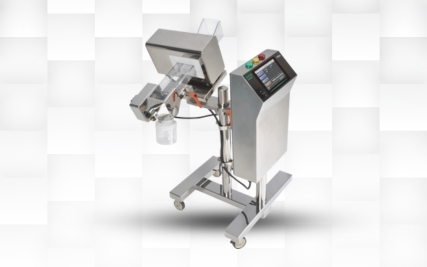
How Metal Detectors Work in Pharma Applications
In metal detectors, products are put through an electromagnetic field. The presence of a metal contaminant
will disrupt it, triggering rejection. The properties of metals that cause disruption are conductivity and
the ability to become magnetized. In general, ferrous metals (like iron) are easily detected due to their
magnetic properties, while accurate detection of non-ferrous metals will depend on how conductive they
are. Modern metal detectors use two different frequencies simultaneously, which are optimized for both
ferrous and non-ferrous foreign materials.
Why Metal Detection Is Essential in Tablet and Capsule Production
In production lines with tablets and capsules, metal detectors are typically placed upstream after the
granulation process—where raw fine powders of active pharmaceutical ingredients and excipients are
aggregated—or before the blister machine.
The main risk of foreign material contamination comes from production equipment, such as fillers, cappers,
sealers, and labelers, which have rotating or moving parts that might shed fragments. Most pharmaceutical
production equipment is made of high-grade stainless steel, which has low conductivity and weak magnetic
properties, making it generally more difficult to detect with metal detectors. However,
pharmaceutical-grade detectors can achieve sensitivity levels of 0.5 mm for stainless steel and 0.3 mm for
ferrous metals, thanks to small apertures and precise coil design.
Additionally, these systems are designed to minimize the negative effects of static electricity,
vibration, and inverter noise from nearby equipment, all of which could interfere with detection accuracy.
X-Ray Inspection Systems for Detecting Contaminants and Quality Defects
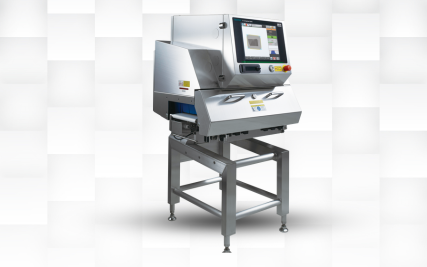
How X-Ray Technology Works in Pharmaceutical Lines
During X-ray inspection, products pass through an X-ray beam and absorb part of it, with denser materials
absorbing more energy. The portion of X-ray that passes through is captured by a sensor and converted into
an image. The system’s algorithm then compares the image of each inspected product to a reference image of
a good product to identify anomalies.
X-Ray Applications: Foreign Contaminants and Product Integrity
Anomalies detected in X-ray images could be the presence of darker spots indicating denser foreign
material contaminants—for example, small metal fragments trapped in the sealed area of sachets and
sticks—but also non-metallic contaminants like rubber or plastic.
Additionally, X-ray systems are capable of detecting quality defects. For example, brighter areas in the
X-ray image might indicate missing needles in pre-filled injection kits, broken tablets, or missing pills
in blisters. Other quality defects that X-ray systems can detect include transdermal patches trapped in
sealed areas (typically difficult to discover with visual inspection systems), missing components in test
kits, or compromised seals in tubes and pouches, which could affect product quality.
Thanks to their ability to detect both foreign contaminants (with a sensitivity as fine as 0.2 mm for
metals) and quality defects, X-ray systems are particularly well-suited for downstream product inspection,
especially for blister cards, where the aluminum cover would otherwise generate false positives if passed
through metal detectors. As X-ray systems are also capable of identifying whether an anomaly is a foreign
material contamination or a quality defect, they usually have a separate rejection bin for each type of
issue.
Checkweighers for Pharmaceutical Dosage Accuracy
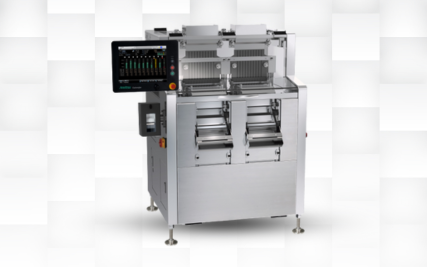
How Pharmaceutical Checkweighers Operate
Checkweighers are designed to measure the weight of even the lightest products with great accuracy. The
models used in pharmaceutical production lines typically feature a force balance weigh cell featuring a
beam mechanism. As a product passes over the weigh cell, it causes the beam to shift out of equilibrium.
The system then applies an electromagnetic force to return the beam to its original position. The amount
of force required to restore balance is converted into precise weight readings, with sensitivity as fine
as ±0.01 g.
The Role of Checkweighers in Quality and Compliance
The FDA and the USP (U.S. Pharmacopeia) allow very narrow margins of weight tolerance in certain
pharmaceutical products. For capsules, tablets, and vials, any deviation in weight from what is stated on
the label might indicate an inaccurate dosage of the active pharmaceutical ingredient. This could reduce
the efficacy of the treatment or lead to adverse side effects for patients.
For other products such as ointments, ensuring accurate weight is important to avoid underfilling, which
can lead to consumer complaints, or overfilling, which results in product giveaway.
Pharmaceutical checkweighers are available in single or multiple lanes and can process up to thousands of
capsules per hour.
Production facilities might use different models, depending on the products and where they are installed.
For instance, a facility might use one checkweigher for pre-lock capsules, another for filled capsules
midstream, and a third one for cases downstream.
Connecting Inspection Systems with Pharma 4.0 Software Integration
In pharma 4.0 production environments, inspection systems are connected to the rest of manufacturing
equipment through software that integrates with MES (Manufacturing Execution Systems) and SCADA
(Supervisory Control and Data Acquisition) systems. This software collects and analyzes production data,
allowing manufacturers to:
- View production status results in real time from tablets and mobile devices
- Forecast capacity requirements
- Monitor production results remotely to respond quickly to production problems
- Detect potential machine failures ahead of time
Regulatory Requirements for Pharmaceutical Inspection Equipment
Failsafe Mechanisms for GMP Compliance
All pharmaceutical products must be inspected by a metal detector and pass inspection. No inspection
equals a rejection. For this reason, metal detectors are designed in such a way that, if the power fails
or an abnormality occurs, the system will default to a “reject” position, so that products are
automatically removed from the production line. As an additional measure, rejector bins are equipped with
a lock that prevents rejected products from accidentally being put back into production.
21 CFR Part 11 Compliance
Inspection equipment for pharmaceutical products must comply with 21 CFR Part 11, the federal regulation
that ensures the integrity of electronic records and signatures. To comply, product inspection systems
must include:
- Password authentication: User access must be authenticated and restricted by role
- Audit trail: Records of machine/user activity must be logged and traceable
- Data encryption and decryption: Ensures secure storage/export of records
- IQ/OQ protocols: Validates readiness for electronic records and integration across systems
Product Traceability and Inspection Data Integration
Under the Drug Supply Chain Security Act (DSCSA), all trading partners in the pharma supply chain
(manufacturers, distributors, dispensers, repackagers) are required to electronically trace the chain of
ownership of prescription drugs down to the single package.
To support this, inspection systems can feed data directly into traceability platforms. For example, a
checkweigher can assign a serial number to a carton or bottle, log the weight and timestamp, and enable
precise recall based on that data if needed.
The Expanding Role of Inspection Equipment in Pharmaceutical Production
Inspection equipment plays a critical role in ensuring product safety, regulatory compliance, and
production integrity. Metal detectors and X-ray systems work in tandem to detect contaminants.
Checkweighers ensure accurate dosage.
When integrated into a connected production environment, these systems support real-time monitoring,
traceability, and preventive maintenance—further extending their role in modern pharmaceutical operations.
