



Extended Reality (XR)
Infinitely expanding metaverse
The market for Extended Reality (XR), the collective term for Augmented Reality (AR) and Virtual Reality (VR), continues to expand.
The main drivers for the expansion are new applications and services such as:
- Consumer and personal applications: immersive games, entertainment, virtual tours, virtual fitting, and so forth
- Industry and business applications: virtual exhibitions, simulations in construction and manufacturing sites, remote monitoring of systems, medical and surgical assistance, and so forth
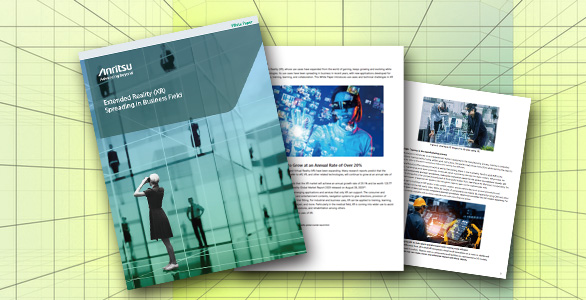
White Paper:
Extended Reality (XR) Spreading in Business Field
Extended Reality/Cross Reality (XR) use cases are expanding in business, including simulation, training, and learning.
This white paper introduces examples of use cases and technical challenges of XR in industry and business.
Challenges
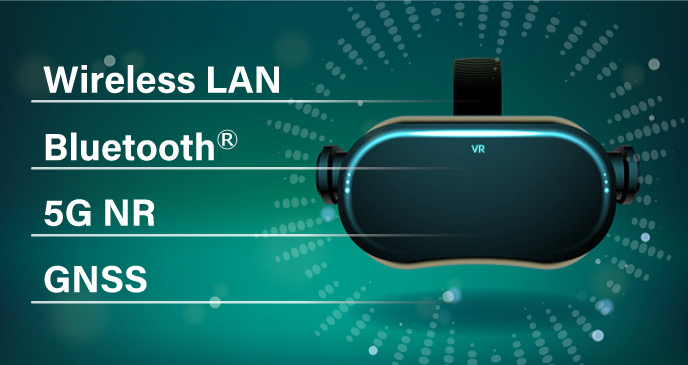
Challenge 1: Support for Multiple Wireless Communication Standards
XR devices have multiple wireless communication interfaces, including Wireless LAN and Bluetooth® technologies for transmitting image and motion sensor data. In addition, 5G NR technology is attracting attention as another interface.
The 3GPP is currently discussing enhancements to 5G NR to achieve even higher speeds and greater capacity to further enhance its functionality.
As multiple radio communication interfaces are incorporated into XR devices, XR device developers are facing the challenge of dealing with the noise and radio interference that arises when a device is in use. Overcoming this challenge and achieving stable wireless communication performance is essential for the widespread use of XR devices.
Challenge 2: High-Density Integration of Wireless Communication Modules
XR device vendors face the challenge of minimizing the communication error rate. It results from noise, which may lead to lower communication speeds and data loss. This is because XR devices need to integrate multiple wireless communication modules in a limited space.
In addition, various noise sources such as power supplies, signal processing, fans, and motors are mounted inside the small enclosure close to the communication module.
Given these challenges, engineers are required to conduct a wide variety of tests during the product development stage of XR devices.
The Bluetooth® word mark and logos are registered trademarks owned by Bluetooth SIG, Inc. and any use of such marks by Anritsu is under license.
Testing Solutions
Solutions: RF Performance Evaluation of XR Devices
XR devices implement a variety of communication interfaces and must deal with issues such as noise and radio interference.
Anritsu provides RF test solutions that ensure XR devices' stable wireless communication performance and support RF performance evaluation during the development, certification, and manufacturing stages.
- Wireless LAN
Evaluating the RF performance of XR devices under practical operating conditions is effective for evaluating the quality of finished products.
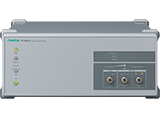
Anritsu's Wireless Connectivity Test Set MT8862A can evaluate the RF TRx characteristics such as Tx power, error vector magnitude (EVM), and packet error rate (PER) using a network mode that enables the testing of WLAN products under actual operation conditions.
- Bluetooth wireless technology
Bluetooth technology is often used for communication between XR goggles and controllers. Also, devices must satisfy the RF performance requirements of the Bluetooth SIG.
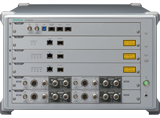
Anritsu's Bluetooth Test Set MT8852B is an industry-standard Testing Solution certified by the Bluetooth SIG. It supports many test items such as RF and the connectivity testing of Bluetooth devices.
- 5G
The RF performance of devices equipped with 5G NR shall be evaluated in each frequency band to determine whether they satisfy the Tx/Rx performance requirements specified in the 3GPP standard.
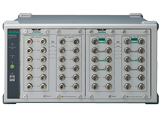
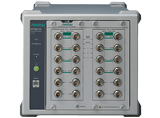
Anritsu’s Radio Communication Test Station MT8000A is capable of performing these evaluations.
Web:
Customer Scenario:

Case Study
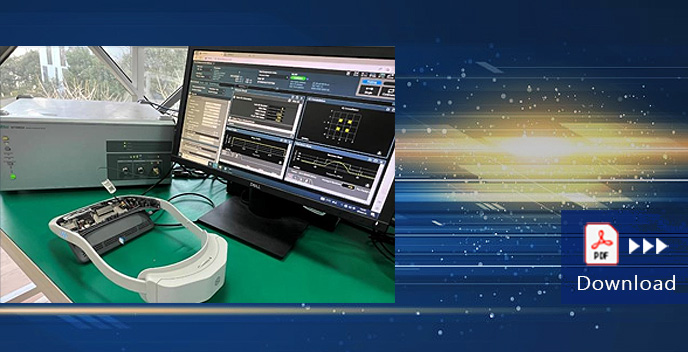
Zhejiang Sunnyverse Technology Co., Ltd.
XR glasses systems vendor challenges to provide excellent XR experiences
using wireless connectivity technologies.
Resources
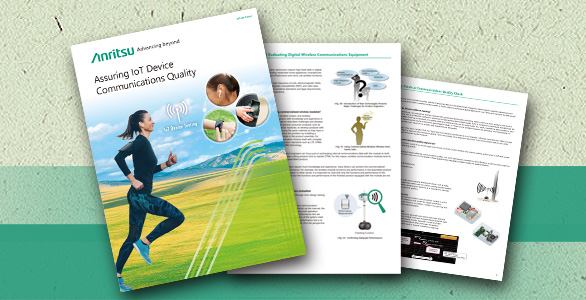
White Paper:
Assuring IoT Device Communications Quality
This white paper provides a clear explanation of how to assess the quality of wireless LAN devices and the necessary functions. It introduces key considerations for implementing wireless standards during the design of IoT devices.



Related Links



Related Products


Contact Us


Copyright 2026