



Cellular V2X & DSRC
Future evolution of driving safety and efficiency
As advances in driving and transportation system safety continue to evolve, vehicle-to-vehicle (V2V), vehicle-to-infrastructure (V2I), and vehicle-to-mobile-network (V2N), wireless communication technologies are moving toward creating a vehicle-to-everything (V2X) society. V2X systems will seamlessly exchange information about road hazards and offer driver an assistance, while cellular vehicle-to-everything (C-V2X) technology will ensure low-latency and high-reliability in all communications, creating a smart transport system centered around the ‘connected car’.
Technologies
In V2X, there are two different types of communication systems:
- Dedicated Short-Range Communications (DSRC)
- Cellular V2X (C-V2X)
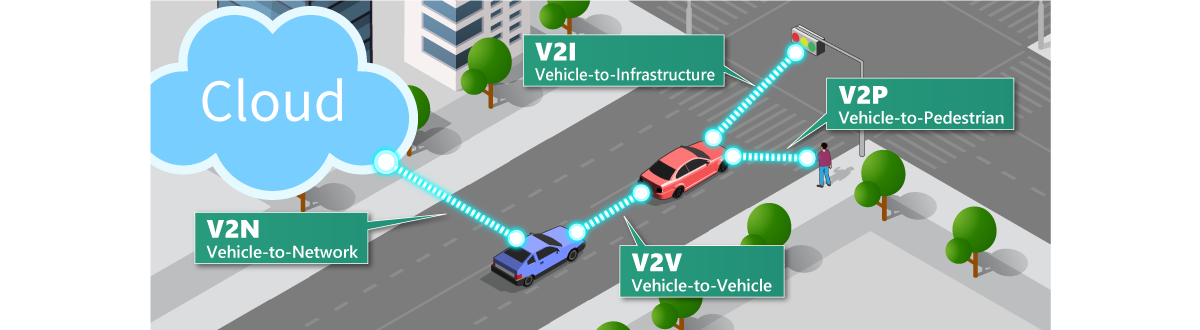
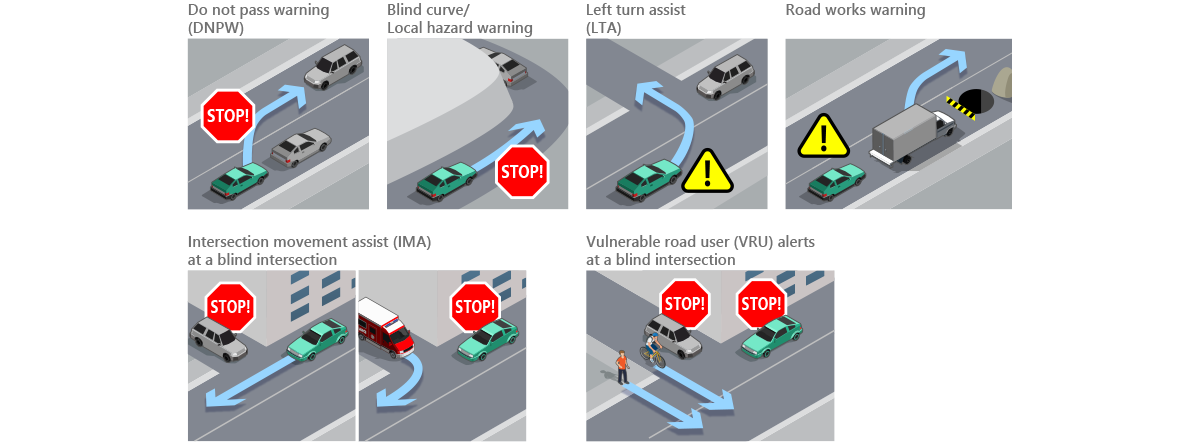
DSRC is a Wireless LAN (WLAN) based technology specified by IEEE 802.11p. It transmits and receives data without passing via other infrastructures, such as mobile networks. C-V2X is a 3GPP-defined technology using mobile networks. Key presumed use cases of V2X are shown in the following graphics.
Among these use cases, V2N, also called Uu interface, uses communication with base stations covering a wide area via mobile networks. Conversely, V2V, V2I, and V2P, for which PC5 interfaces will be applied, directly communicate with vehicles, infrastructures, and pedestrians using short-distance and low-latency technologies without mobile networks. To ensure the quality of wireless communication, V2N requires testing the operation of call connections between a vehicle and each base station, although V2V, V2I, and V2P do not require call connections.
Challenges
In order to successfully implement V2X, in-vehicle communication must adhere to telecommunications standards, the legislation of various frequency allocations and transmission powers within the relevant country, and allow for scalability to support network growth in the future.
V2X has the important mission of achieving road safety and accident prevention, requiring automotive OEMs and Tier1 vendors to conduct a variety of function and regression testing during R&D. This requires significant development costs of creating test cases simulating the communication procedures under presumed driving situations along with the expertise in wireless communication protocols to create test scenarios. Consequently, OEMs and Tier 1 vendors prefer a low-cost evaluation system which can support quick testing by creating test cases without requiring extensive expertise.
Testing Solutions
Anritsu test solutions are engineered to solve your testing needs at every stage of V2X communication device development.
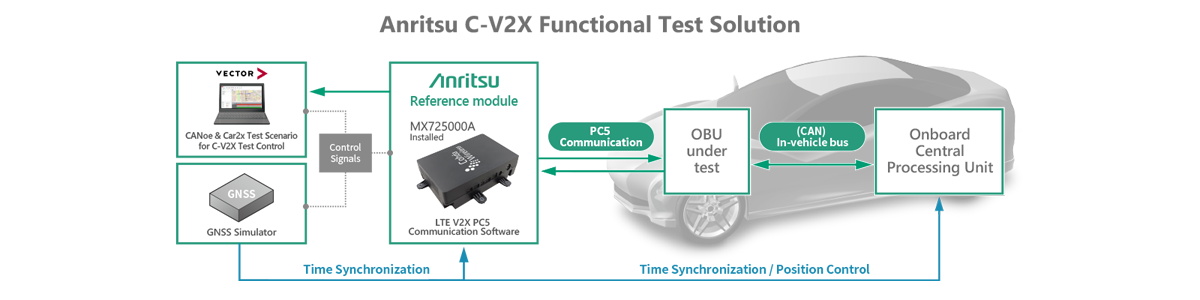
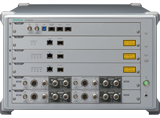
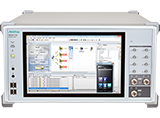
V2V, V2I, and V2P device testing with Anritsu’s LTE V2X PC5 Communication Software Solution
- Verify your devices’ compliance with regulatory and standards requirements, including pre-commercialization certifications.
- Support Intelligent Transport System (ITS) defined test cases in major countries, when combined with the development and test software tools provided by Vector Informatik GmbH.
- Reduce your C-V2X development time with scripting-free testing and easy-to-use GUI.
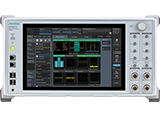
IEEE 802.11p and LTE-V2X direct communications (PC5 interface) device testing with Anritsu’s Universal Wireless Test Set MT8870A/MT8872A
- Evaluate RF characteristics of wireless communication devices during the development and manufacturing processes.
Reduce the testing costs of V2X in-vehicle communications equipment and modules due to Anritsu’s collaboration with key V2X chipset vendors.
Resources



Related Links

Related Products
Contact Us


Copyright 2026