



AD/ADAS
Endeavor for enhanced safety benefits in vehicles
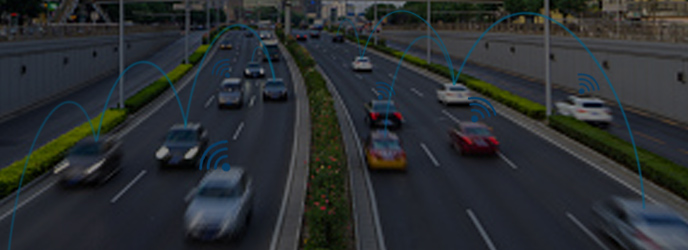
Efforts are underway in many countries worldwide to implement Advanced Driver-Assistance Systems (ADAS) and Autonomous Driving (AD), aiming to prevent traffic accidents and ensure safe and comfortable drives. ADAS utilizes sensors, such as on-vehicle cameras and mmWave radar sensors, to monitor conditions both inside and outside the vehicle. It offers various driving assistance features, including collision warning, automatic braking, and parking assistance. AD employs remote monitoring and control features, allowing a vehicle to move autonomously without human intervention. Progress has been made in enhancing communication technologies for AD and ADAS, encompassing not only wireless communication via mobile networks but also faster wired communication between the Electronic Control Unit (ECU), responsible for electronic vehicle control, and sensors like Light Detection And Ranging (LiDAR).
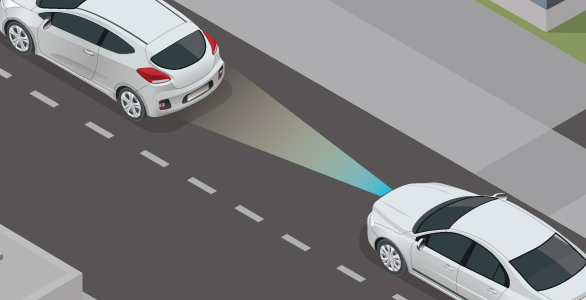
Adaptive Cruise Control
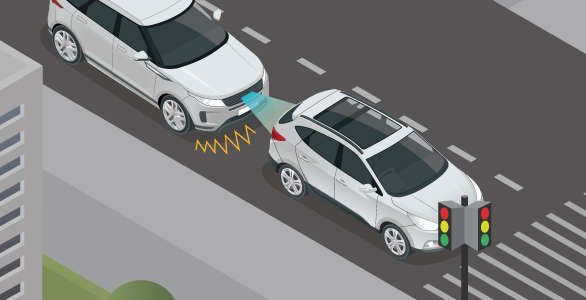
Collision Avoidance Braking
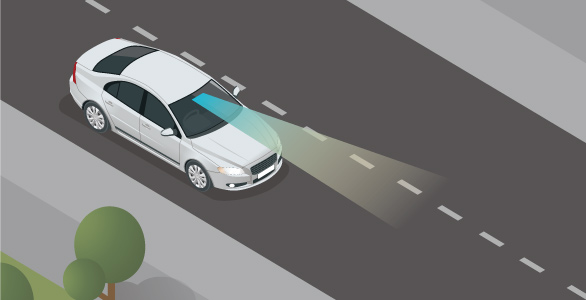
Lane Keeping Assist
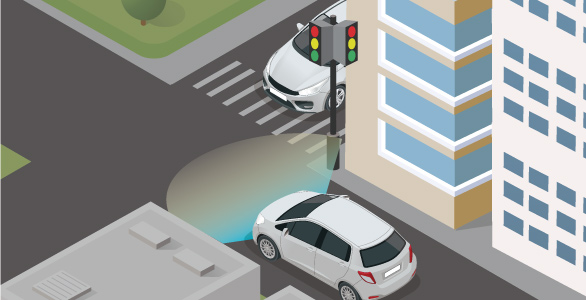
Head-On Collision Warning
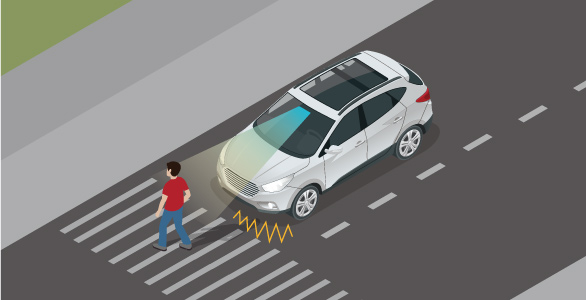
Pedestrian Collision Avoidance Braking
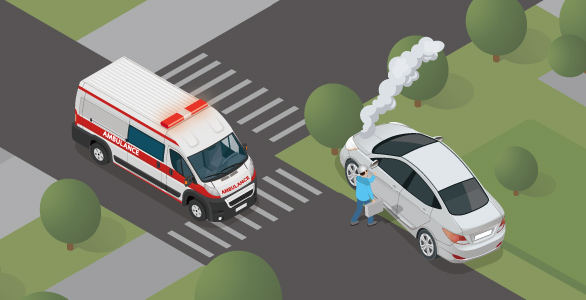
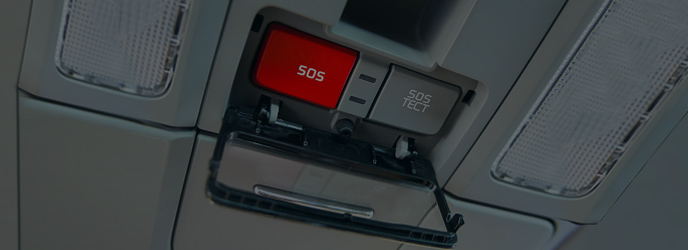
eCall Systems
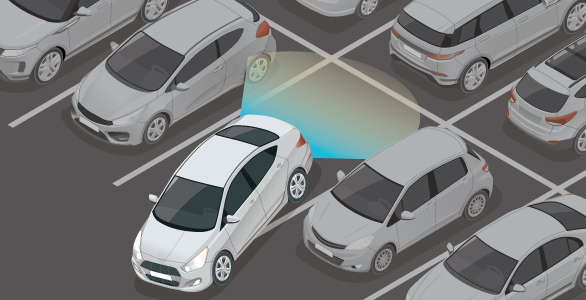
Parking Assistance Automatic Parking
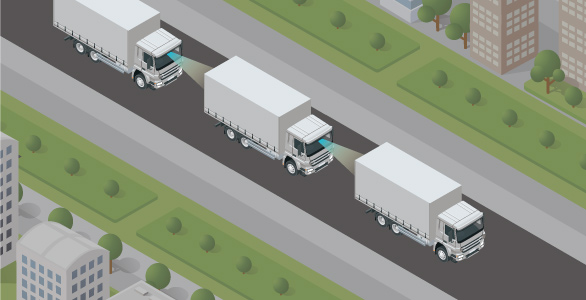
Vehicle Platooning
Challenges
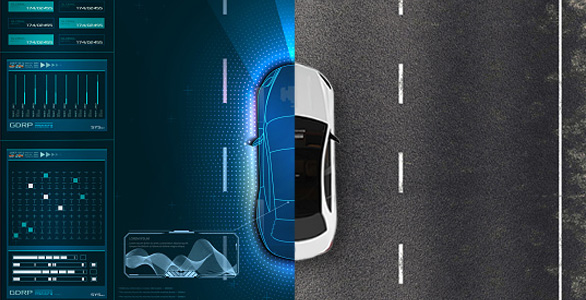
Challenge 1: Reduce In-Person Testing Hours Required for AD/ADAS Development
In the development of AD and ADAS, conducting tests with the physical vehicle becomes impractical due to the myriad combinations of ever-changing traffic, weather, and radio wave conditions. Managing this extensive range of test conditions presents a considerable challenge, and reproducing test results can be equally challenging. To overcome these obstacles, there is an increasing demand for enhancing test efficiency through the use of a digital twin. This digital twin integrates the physical vehicle with a virtual environment that accurately simulates real-world driving conditions.
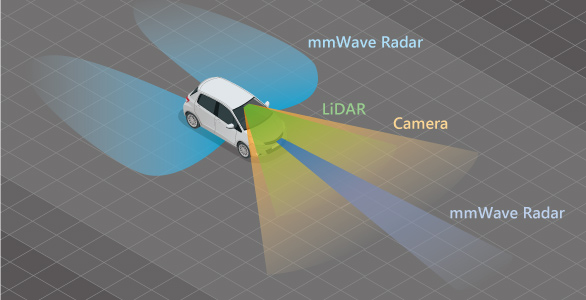
Challenge 2: Testing of RF Performance of On-Vehicle Sensors
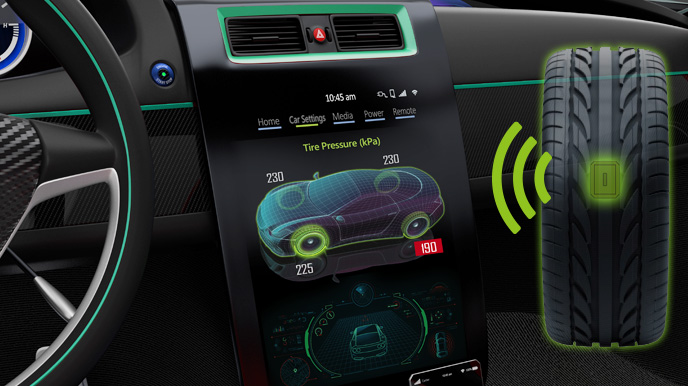
Crucial to the advancement of AD and ADAS are on-vehicle sensors like mmWave radar, LiDAR sensors, and cameras. These devices play a pivotal role in recognizing the surrounding conditions of a vehicle and linking the gathered data to its automatic control system. Another noteworthy sensor is the tire pressure monitoring system (TPMS), responsible for monitoring the air pressure and temperature of a vehicle's tires. The mandatory installation of TPMS is being enforced in several nations and regions, including the U.S., EU, South Korea, and Taiwan. Tire data is transmitted from sensors mounted on the tires to the in-vehicle ECU and infotainment system using the UHF band, Bluetooth® wireless technologies or others.
Radar, TPMS, and other sensors are essential for driving stability, safety, and the continued improvement of AD and ADAS capabilities. Consequently, it is imperative to evaluate the fundamental characteristics of radio signals, such as frequency and power, to ensure their effectiveness.
The Bluetooth® word mark and logos are registered trademarks owned by Bluetooth SIG, Inc. and any use of such marks by Anritsu is under license.
Testing Solutions
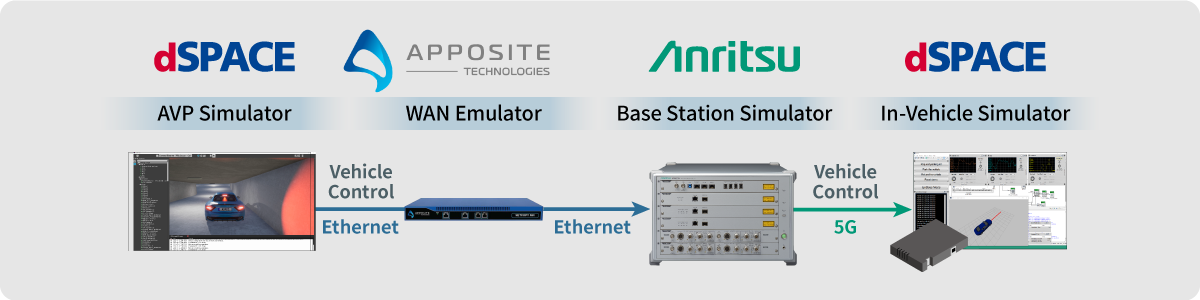
Solution 1: Enhancing Testing Efficiency Through a Virtual Environment
Anritsu offers a network simulator that, when utilized in conjunction with an emulator from a partner company or an on-vehicle simulator, generates a virtual environment. By providing testing solutions essential for the development, evaluation, and testing of automotive applications like telematics, infotainment, and V2X, Anritsu assists customers in optimizing the efficiency of their AD and ADAS function tests. This, in turn, ensures the reproducibility of the tests.
Video:
Connected AD/ADAS Communications Quality Test Solution
The AVP function enables unmanned automated valet parking, exchanging information between the vehicle and the parking lot infrastructure such as monitor cameras and sensors, via a mobile network. This testing solution allows a test to be started even from the virtual stage where an actual vehicle may not yet be available.
Valet Parking Service:
In a valet parking service, the staff of a large parking lot or commercial facility takes over a customer’s vehicle, parks it for the customer, and returns it when the customer is ready to leave. AVP is a type of advanced autonomous driving of AD level 4.
Video:
Automated Valet Parking Simulation
Solution 2: RF Tests of On-Vehicle Sensors
Anritsu provides solutions for evaluating the basic characteristics of radio signals to test mmWave radar sensors and TPMS, which are the key devices for the implementation of the AD and ADAS functions.
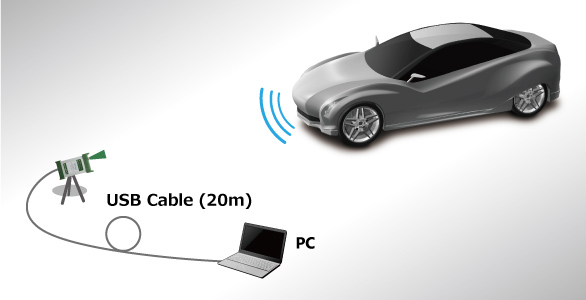
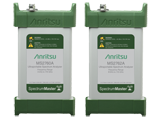
Radio waves in mmWave bands are attenuated or otherwise affected by the materials of the front grille, bumper, and others. The MS2760A, a palm-size spectrum analyzer with a built-in battery, allows a flexible testing system to be constructed and modified as needed. It enables the basic radio performance, such as frequency characteristics and power, to be easily evaluated during the debugging stage of the mmWave radar development process.
Application Note:
E-Band Based Car Radar Emblem Measurements
White Paper:
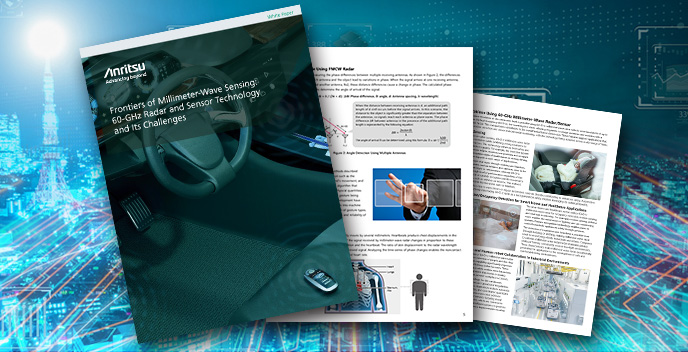
Frontiers of Millimeter-Wave Sensing: 60-GHz Radar and Sensor Technology and Its Challenges
This White paper focuses on 60-GHz millimeter-wave radar and sensors, which are increasingly being used. It introduces trends in frequency regulations, their detection capabilities, and applications using 60-GHz millimeter-wave radar and sensors, as well as technical challenges and solutions.
White Paper:
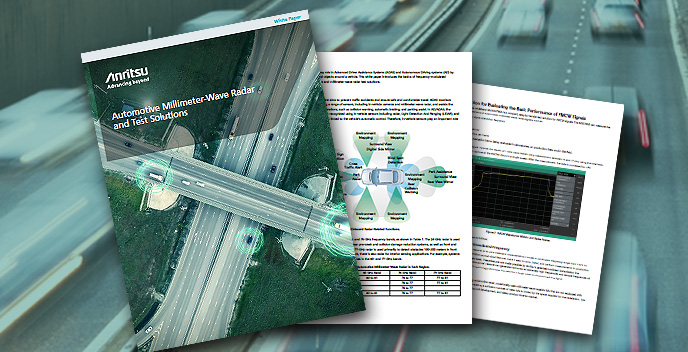
Automotive Millimeter-Wave Radar and Test Solutions
This white paper introduces the test challenges, solutions for automotive radar, and its fundamental method, Frequency Modulated Continuous Wave (FMCW).
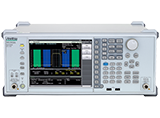
Anritsu also provides the MS2830A, a signal analyzer equipped with the functions and performance needed to test signals transmitted by the TPMS transmitter. For example, the measurement time of FSK-modulated burst signals tends to be long. The use of the Fast Fourier Transformation (FFT) method shortens the measurement time, increasing testing efficiency.
Resources



See More


Related Links

Related Products
Contact Us


Copyright 2026