

Pharmaceutical Metal Detector
Realizing advanced solutions against contaminants in pharmaceutical production
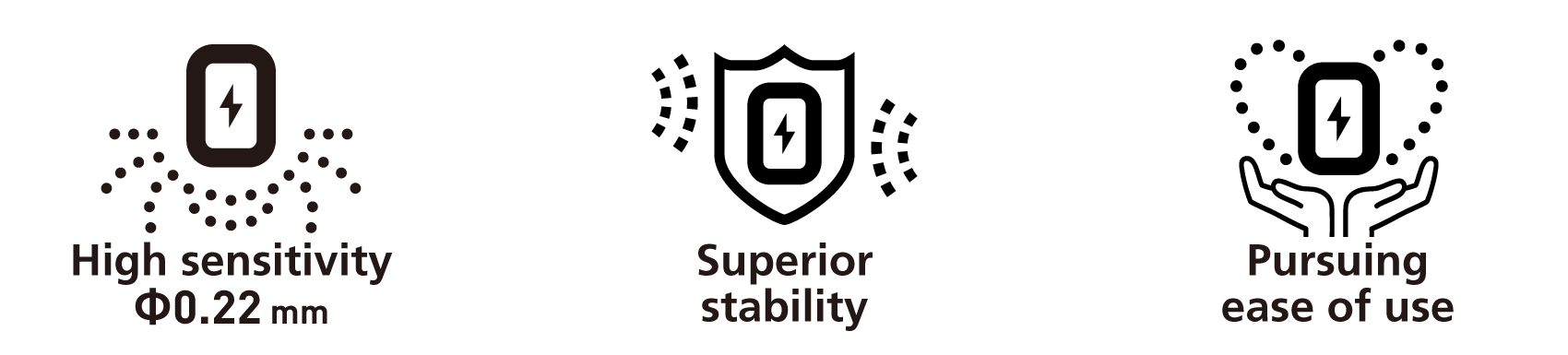
Detecting fine metal contaminants with the maximum sensitivity of 0.22 mm diameter
Tablets and capsules are relatively small and light targets for a metal detector. The key to detecting metal contaminants with high sensitivity is to create a magnetic field that is optimal for the target pharmaceutical and to properly extract contaminant signals at the signal processing stage.
Anritsu metal detectors feature construction of the detection head, coil winding, and magnetic field frequency that is optimally tuned for target tablets and capsules.
Contaminant signals are extracted from the magnetic field change signals by filtering out the waves that are affected by the targets.
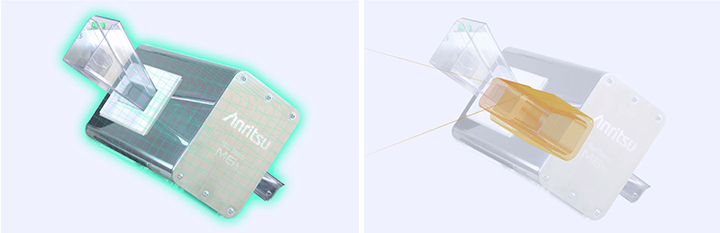
Detection head specially designed for inspecting tablets and capsules
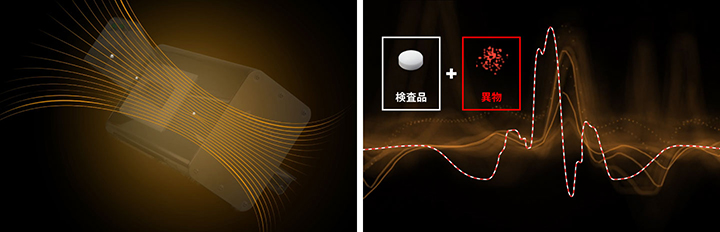
Two points: optimal magnetic field and signal processing
Maintaining stable detection that is resistant to vibration, electromagnetic noise, and static electricity
Vibration
Usually, a metal detector is installed at downstream processing equipment after a tableting machine or a capsule filler in a pharmaceutical production line, where vibrations constantly occur. Improper handling of vibrations could cause false rejection. Anritsu metal detectors control the phase and gain of the noise waves with the proprietary signal processing technologies, which cancel out the vibrations generated by the production line equipment and enables the detection of fine signals from contaminants.
Electromagnetic noise
Production line equipment uses inverters, which generate electromagnetic waves. Again, their improper handling could cause false rejection. Anritsu metal detectors avoid the effects of noise and frequency interference by digitizing signals, multiplexing frequency channels, and auto-learn settings.
Static electricity
Capsules tend to generate static electricity, which adversely affects the operation of the metal detector. Capsules can stick to the chute, preventing smooth flow, which result in rejection failure due to the abnormal rejection timing. Static electricity that has accumulated inside the detector could discharge, which also could result in malfunction. This is why static electricity must be removed. In addition to controlling static electricity by grounding, Anritsu can offer antistatic transport chutes and ionizers as optional solutions.
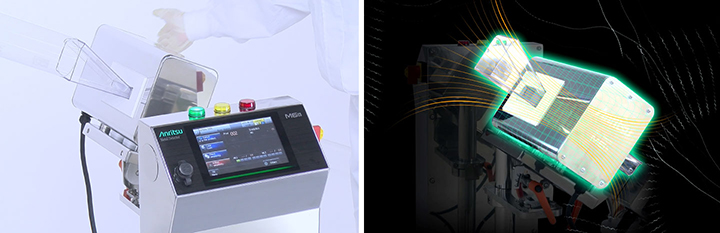
Maintaining stable detection that is resistant to vibration and electromagnetic noise
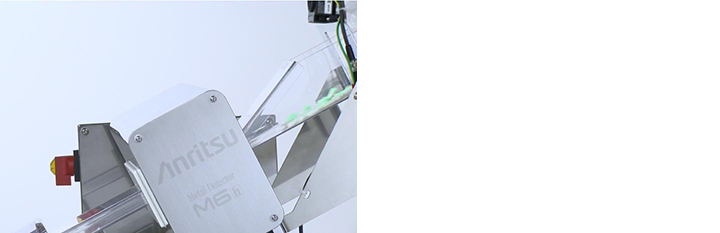
Antistatic design
Elaborately designed to the finest detail, pursuing ease of use
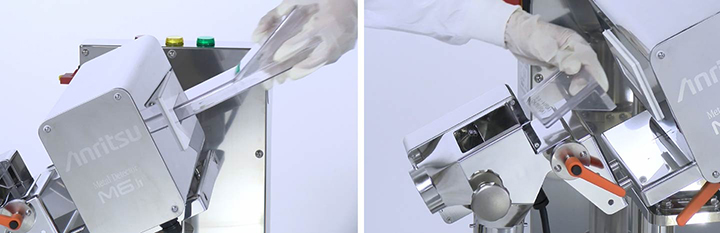
Cleaning without tools
Parts that are in contact with tablets and capsules (transfer chute, rejection box, and NG bottle), which need to be cleaned every day, can be attached, and detached without tools, and easily cleaned.

Adjustment without tools
Basic adjustment including the chute angle and swing angle do not require tools.
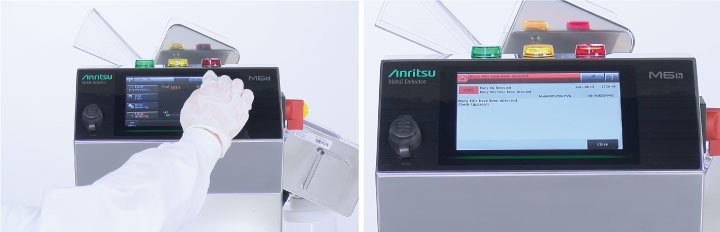
Intuitive and comprehensive user interface
With the comprehensive user interface, basic operations, settings such as type registration, and responding to error alarms can be performed intuitively.
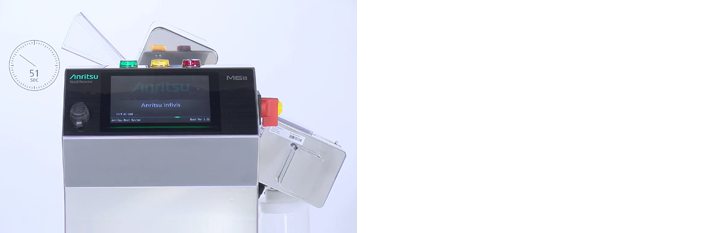
No warm-up is required after starting
After starting, Anritsu metal detectors are ready to operate without requiring a warm-up period.
Validation Support/Fail Safe Function
Anritsu metal detectors have a variety of functions to validate that metal detection has been completed properly.
Constant internal state monitoring
The state inside the metal detector is constantly monitored to avoid operation in an abnormal state. If there is an abnormality in the output from the detection head and balance voltage, an error/alarm screen appears to inform the operator.
Self-diagnosis of detection performance
It is possible to check that the metal detector retains optimal performance when initially installed in the factory by generating a pseudo-NG signal.
Duplex monitoring of rejection gate operation
The position sensors on the OK side and the Non-Good side of the rejection part constantly monitor the rejection operation. It is designed such that when the power fails or an abnormality occurs, the detector always stands by with the rejecter in the Non-Good direction, which is the fail-safe design.
IQ/OQ support function
Anritsu detectors have functions to assist with various verifications including IQ/OQ. It is possible to check the required items using the dedicated sensors and monitor screens.
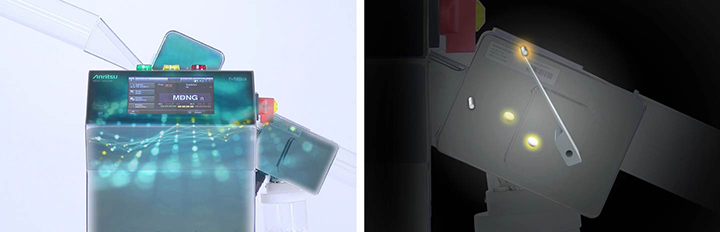
Constant monitoring of the internal state and duplex monitoring of the rejection operation
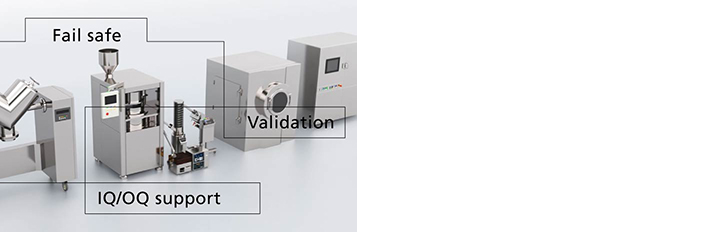
Functions to assist with various validation processes including IQ/OQ
Achieving both data integrity compliance and excellent operability.
Compliant with FDA 21 CFR Part 11, Annex 11, and PIC/S PI 041, the system ensures data integrity while offering improved operational efficiency and superior usability.
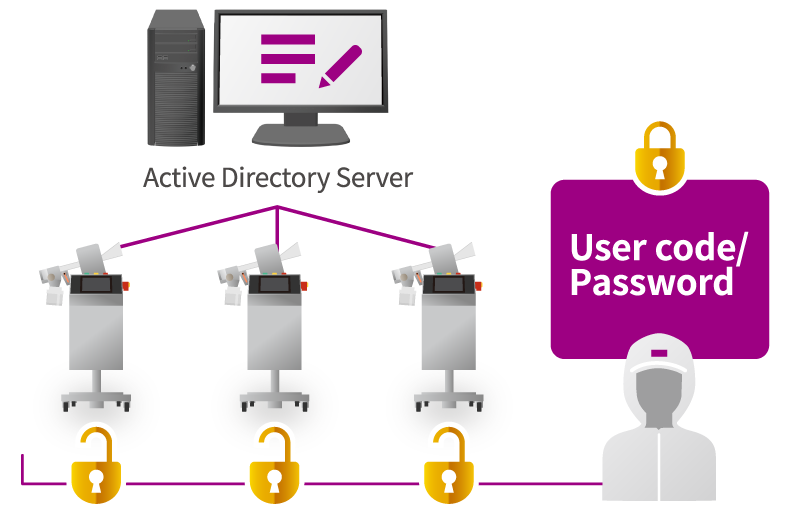
User Authentication (User Management)
Access levels can be set for each user, allowing only permitted operations and monitoring for misoperation. The system supports Windows Active Directory, which allows you to centrally manage user information with your company system. Each operator can log into multiple machines on the production line with a single user information.
*Microsoft, Windows, and Active Directory are trademarks of the Microsoft group of companies.
Audit Trail
The system records operation history, production‑related actions, and the results of operational checks. These records can be used to monitor unauthorized or incorrect operations and to analyze their causes. When parameters are changed, the reason for change can be entered and stored in the output data.
Data Output
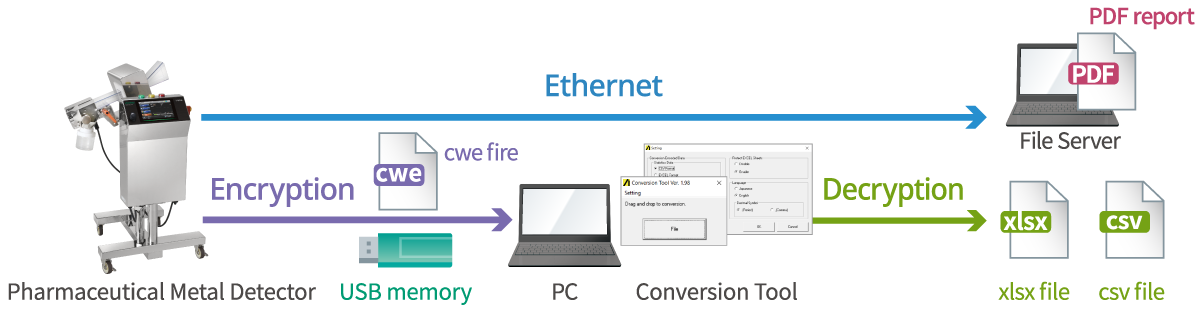
Audit trail records and statistical data can be output through Ethernet as non‑editable PDF reports or encrypted data files. Encrypted files can also be exported to a USB memory device and decrypted on a PC. Furthermore, operators can easily back up and restore various data and parameters of the equipment over Ethernet.
Model Comparison
| High sensitivity model | High performance model | ||
|---|---|---|---|
| Model | KDS0902PSW | KDS1004PSW | |
| Opening inner diamter | 90 mm × 25 mm | 100 mm × 40 mm | |
| Chute inner diameter | 76 mm × 16 mm | 86 mm × 31 mm | |
| Detection sensitivity | Fe | 0.22 mm dia. | 0.25 mm dia. |
| Non-Fe | 0.25 mm dia. | 0.30 mm dia. | |
| SUS316 | 0.37 mm dia. | 0.40 mm dia. | |
| Product | Tablets, soft capsules: thickness of 3 mm or more Hard capsules: capsule No. 000 to 5 |
||
| Maximum processing capacity | 580,000 capsules/hour (9,700 capsules/min) | 1,800,000 capsles/hour (30,000capsules/min) | |
| External dimensions | Height: 660 mm to 1080 mm, Width: 550 mm, Depth: 480 mm | Height: 660 to 1090 mm, Width: 550 mm, Depth: 480 mm | |




Copyright 2026