

Dual Energy HR Type X-ray Inspection System Fish Bone Detection Algorithm
Equipped with a Dedicated Algorithm Specialized for Fish Bone Detection
High-Sensitivity Detection of Thin and Fine Fish Bones
Current Status of Fish Bone Removal and Detection
Fish bones are primarily removed and inspected manually. However, this process is time-consuming and physically demanding, often leading to oversights. If bones are found in products labeled as "boneless," such as fillets or fish burgers, it can result in consumer complaints. In rare cases, if a bone gets stuck in the throat, it can pose a danger.
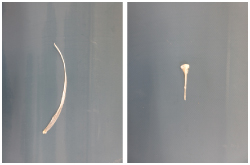
Conventional X-ray Inspection for Residual Bones
Due to the low density of fish bones, conventional X-ray inspection machines struggle to clearly display anything other than large bones in the transmission images, making detection difficult. Even if a faint shadow of a bone is visible, automatic detection by the inspection machine is not possible. Workers must manually inspect each transmission image to determine the presence of bones. Below is a transmission image of a salmon fillet taken with a standard X-ray inspection machine.
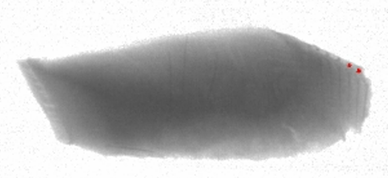
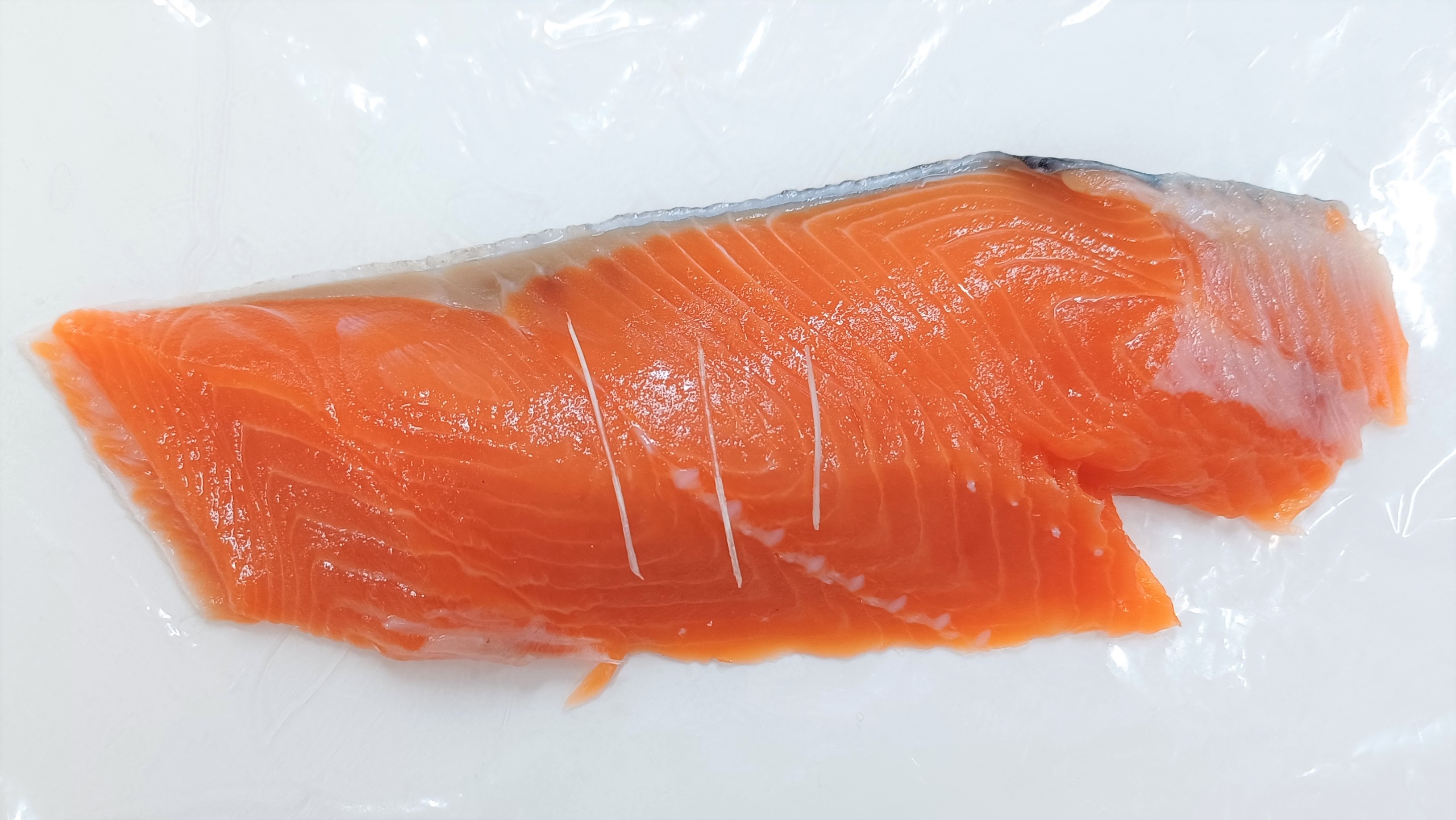
Bones are originally present in the upper right and lower left parts of this fillet. Additionally, a bone has been placed in the center for testing purposes. Although the shadows of the bones are faintly visible, the difference from the fish meat is minimal, and the only parts that are automatically detected are the two red dots in the upper right.
High-Sensitivity 'Automatic Detection' of Remaining Fish Bones with the New X-ray HR Type!
Anritsu's X-ray inspection system HR type is equipped with a new dual-energy sensor, which enhances the sharpness of transmission images. This allows for clearer imaging of lower-density and thinner bones. Unlike previous images, the contours of the bones are now more distinctly visible.
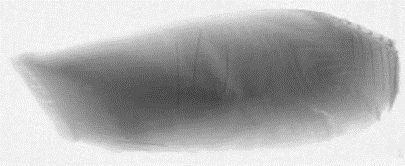
Dual-energy technology is applied to this transmission image. It eliminates the influence of the fish meat and extracts the influence of the bones. Additionally, a detection algorithm specialized for fish bone detection enables the identification of the fine bones unique to fish. It can sensitively detect thin bones less than 1 mm thick remaining in fish fillets or slices.
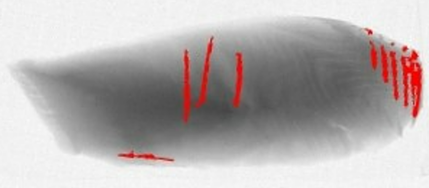
Product Test Examples
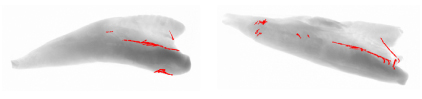
Fillets
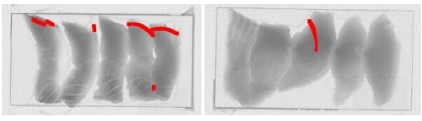
Thinly sliced raw fish (Sashimi)
Related Products
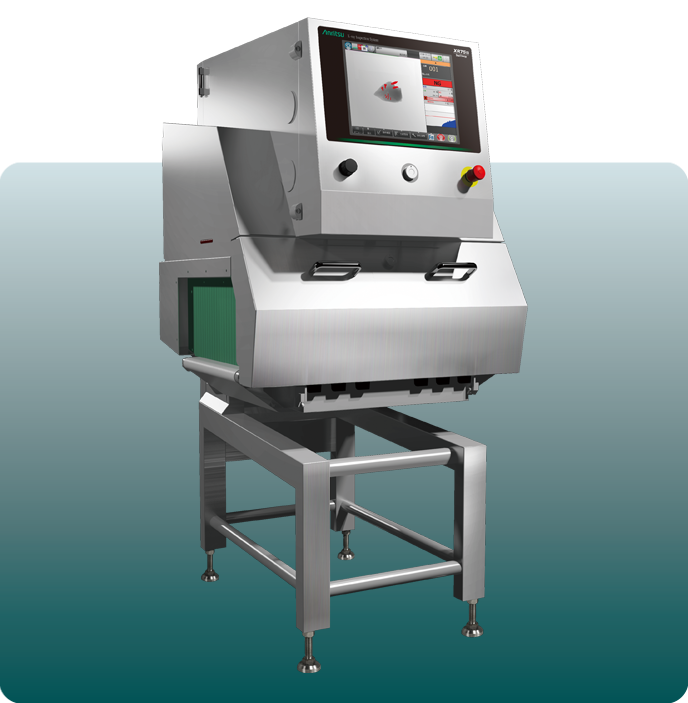
XR75 DualX HR
Equipped with a new High Resolution Dual Energy Sensor for enhanced detection performance.
The detectable range may vary depending on the type of fish and the form of the product. For more details, please contact us.



Copyright 2026