
Cold-form foil blister packs protect sensitive pharmaceuticals from light, moisture, and oxygen
— but their opacity makes visual inspection impossible. Anritsu X-ray systems make it easy to inspect double-foil materials accurately, safely, and non-destructively.
Detect defects. Eliminate foreign materials. Ensure quality. Maintain productivity.
Why X-Ray for Pharma Packaging?
Many pharma products are packaged in foil and opaque materials which inhibits visual inspection. Anritsu’s x-ray systems detect defects in tablets and capsules even after they’ve been packaged. X-rays penetrate foil and opaque materials, capturing internal images of the product to enable full inspection.
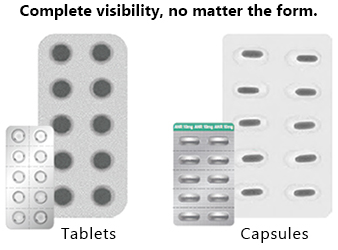
One System, Multiple Inspection Capabilities
A single Anritsu X-ray unit can simultaneously perform shape analysis, count verification, and contaminant detection — eliminating defects before products exit your line.

Safety and Compliance
Unlike food products, X-ray exposure in pharmaceuticals is not regulated by law. Still, Anritsu has verified safety through joint research with academic institutions, confirming no impact on drug content, efficacy, or safety from inspection-level X-ray doses. 1
The FDA has also published the following comment regarding X-ray exposure to pharmaceuticals: 2
Real-World Defect Examples
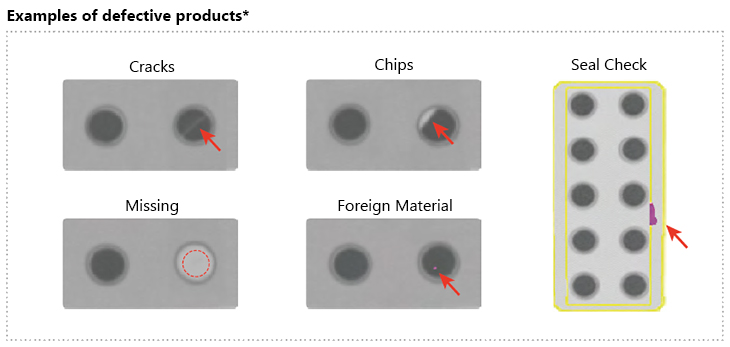
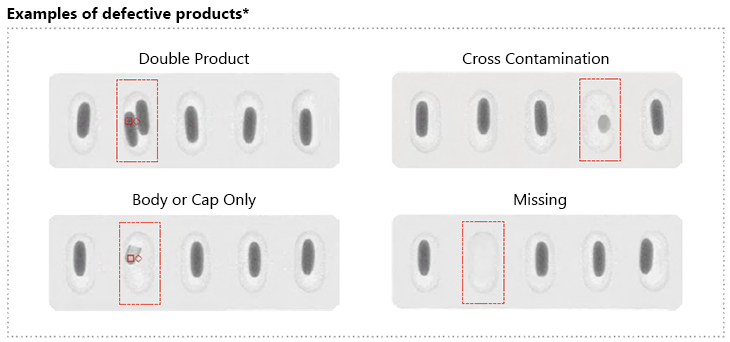
* Inspection accuracy varies depending on the thickness and shape of the product. Please consult with our sales representative to verify your application
Key Benefits of Anritsu X-Ray Inspection
- Opaque Packaging? No Problem:
High-resolution X-ray imaging allows inspection through double-foil, laminated films, and other nontransparent materials.
- Multi Inspections in One Unit:
Check counts, detect foreign materials, identify broken or chipped tablets — all in a single pass.
- Boost Your Brand Reputation:
Prevent defective products from reaching the market. Protect your brand, maintain compliance, and build trust with your customers and partners.
- Easy Complaint Resolution:
With image storage, you can archive inspection records and quickly respond to inquiries or quality claims. (Image saving requires optional software.)
- Identify Process Issues:
If patterns of defects are found, the system can help you troubleshoot packaging or formulation issues at their onset before they escalate into more costly problems.
Line Integration
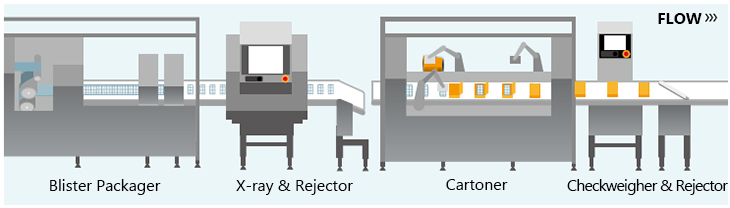
X-ray systems are typically installed just after the blister packaging machine — before the cartoner — enabling final inspection at full line speed. Defective products are automatically rejected before reaching downstream equipment.
CONTACT US
PRODUCT PAGE
