
Measures to Prevent False Rejects in Metal Detectors: External Noise Part 1
In the past, we have featured changes in the temperature of the product to be inspected and the way it is passed through as causes of false rejects in metal detectors.* The next two papers will feature "external noise" which can cause false rejects. In this paper, we will explain about the external noise caused by electricity.
* Please refer to the "Tips for Effective Use of Metal Detectors - Countermeasures Against False Detection Vol.2-".
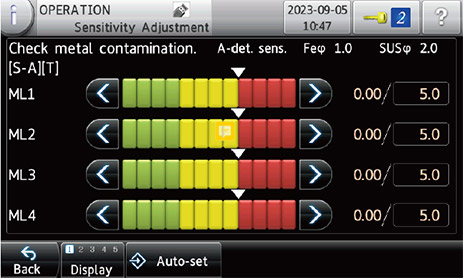
The indicator is fluctuating due to inverter noise
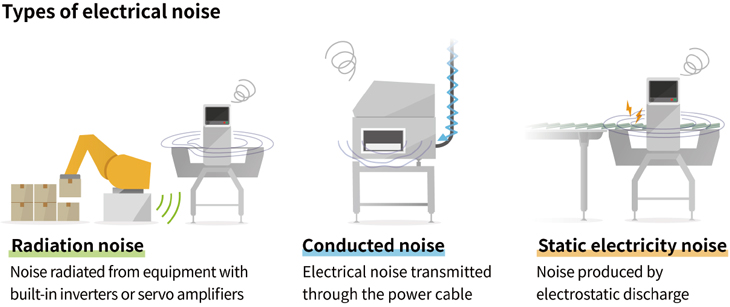
In a production facility, various equipment is in operation, and thus external noise caused by electricity (hereafter referred to as "electrical noise") is generated everywhere. Electrical noise can affect the magnetic field produced by metal detectors, causing false rejects. This paper will focus on electrical noise caused by radiation, conduction, and static electricity, and will provide explanations about the causes and measures to counteract them.
How metal detection works
The metal detector generates a magnetic field with a specific frequency by passing an electric current through a coil, monitors changes in the magnetic field (product effect) as the product passes through the magnetic field, and determines that a foreign metal contamination has occurred when it detects a signal exceeding a set detection limit (threshold value).
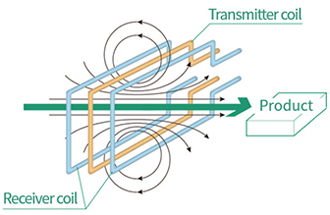
Magnetic field image of coaxial type metal detector
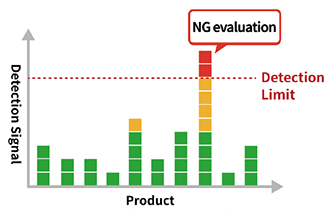
Detection image of metal detector
Types of electrical noise and countermeasures
Radiated noise 1
Palletizers that stack boxed goods on pallets, sheet cutters installed at the entrances and exits of manufacturing rooms, and air conditioning systems have built-in inverters and servo amplifiers that control motors by setting arbitrary frequencies. When they operate, not only certain frequencies but also higher harmonics are generated. It can cause noise that disrupts the magnetic field of metal detectors.
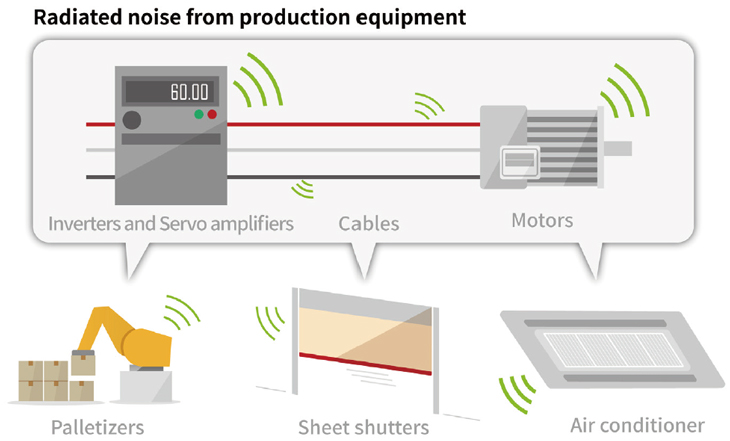
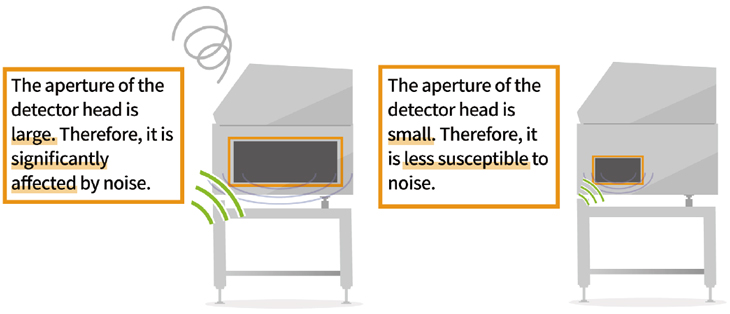
The effect on the magnetic field depends on the strength of the radiated noise, the distance to the detector head, and the size of the aperture of the detector head. Even at interfering frequencies, the effect on the magnetic field will be less if the device is far from the noise source, and even if the distance is the same, the larger the opening is, the more susceptible it will be to noise interference.
Experiment
In order to see whether differences in the frequency of radiated noise affect the magnetic field, we will
create a jig that connects an inverter, motor, and coil, and radiate the radiated noise toward the detector head of a metal detector.
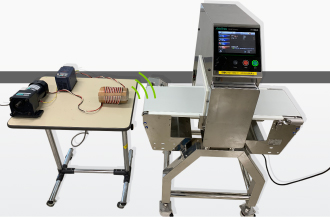
Jigs and metal detectors
First, before radiated noise was emitted, we checked the noise monitor screen of the metal detector to
ensure that there was no noise that would significantly disturb the magnetic field.
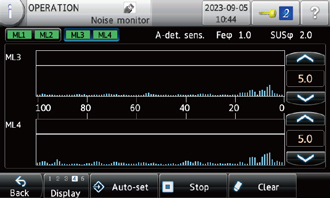
Noise monitor screen before radiating noise
Next, we turned on the power supply to the jig and changed the frequency with the inverter, the effect of
which was clearly visible on the noise monitor screen. You can see how it starts to affect the magnetic field of the metal detector.
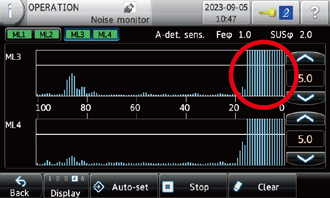
Result of changing the inverter frequency
When the inverter frequency was further changed, the effect on the magnetic field was confirmed on the
noise monitor screen to be small.
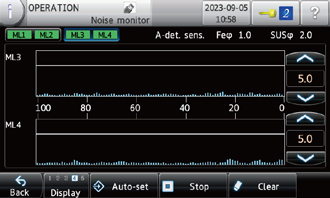
Further change the inverter frequency
Next, we verified the effectiveness of the shielding plate in preventing radiated noise from the outside.
[No shield]
If the inverter frequency is gradually changed using the same jig as before, the monitor will show a false reject due to noise effects.
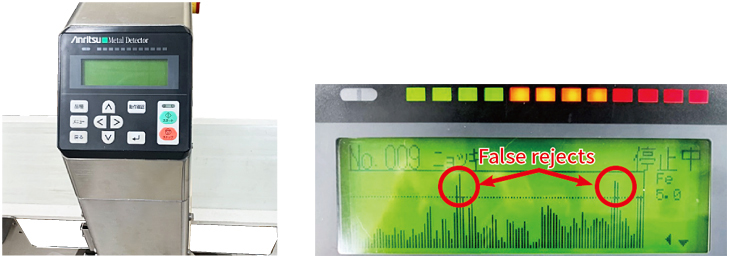
[With shield]
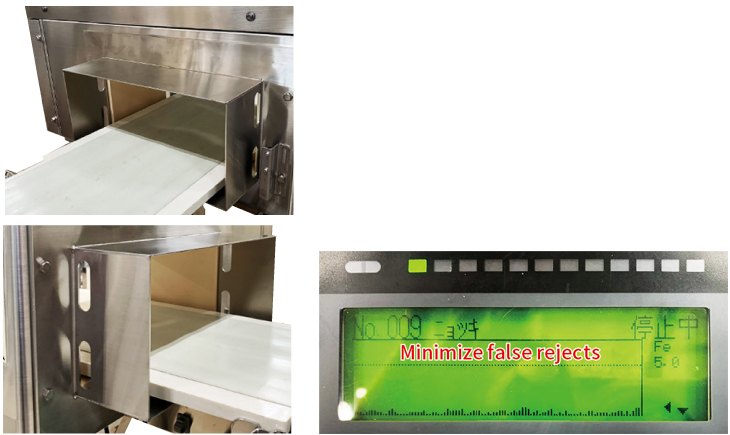
Verification with shielding plates attached to both ends of the detector head showed that noise effects were greatly reduced, indicating the effectiveness of shielding.
Countermeasure
It turns out that radiated noise from equipment with inverters affects the magnetic field of metal detectors. In actual production, try implementing the following measures.
- If possible, adjust the inverters and servo amplifiers of nearby equipment to change the frequency of the radiated noise.
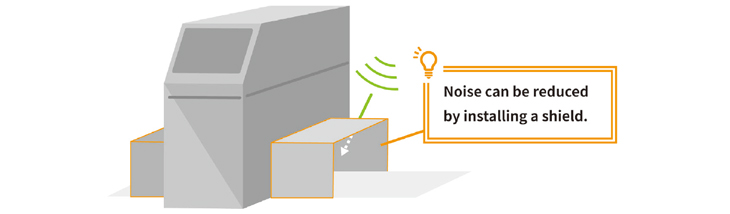
- Attach a shield plate to the detector head to reduce radiation noise.
- Store the inverter, servo motor, cables, and motor in a box made of magnetic metal, such as steel, that has a shielding effect.
- Use the metal detector's "noise avoidance setting".*
*"Noise avoidance setting" is installed in our M6-h series metal detector.
Radiated noise 2
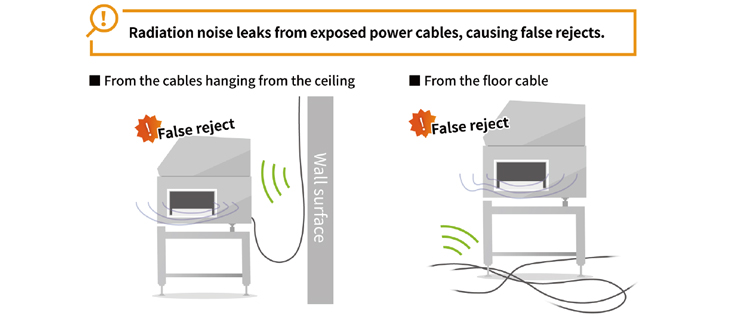
If the cables of the metal detector or other nearby devices are hanging from the ceiling or the power cables at the foot of the metal detector are exposed, the generation of a magnetic field can occur when an electric current flows through the power cables. This could lead to interference with the metal detector's magnetic field by the leaked radiation noise, potentially resulting in false rejects.
Countermeasure
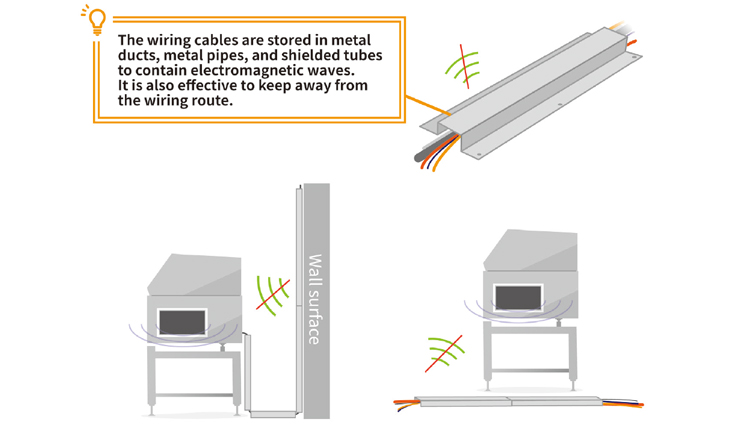
By storing power cables in metal ducts, metal pipes, and shielded tubes, radiated noise leaking from power cables is contained and magnetic field disturbances are improved.
Conducted noise
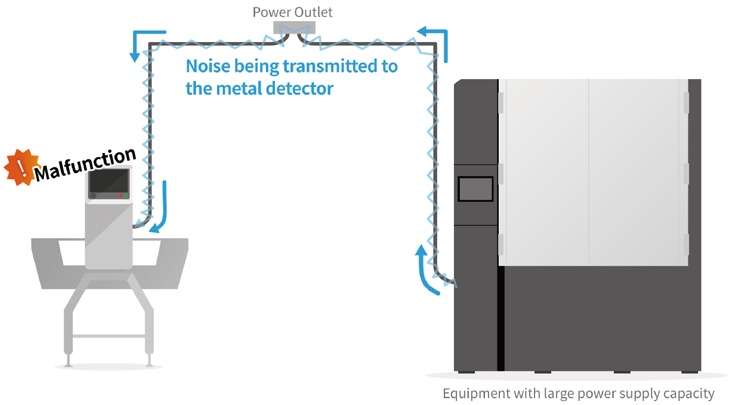
If the power cable of the metal detector is connected to the same outlet or distribution board as a device with a large power capacity, such as a box making machine, noise from the power supply will be transmitted through the ground wire of the metal detector's power cable and inside the metal detector. This may cause intrusion and malfunction.
Countermeasure
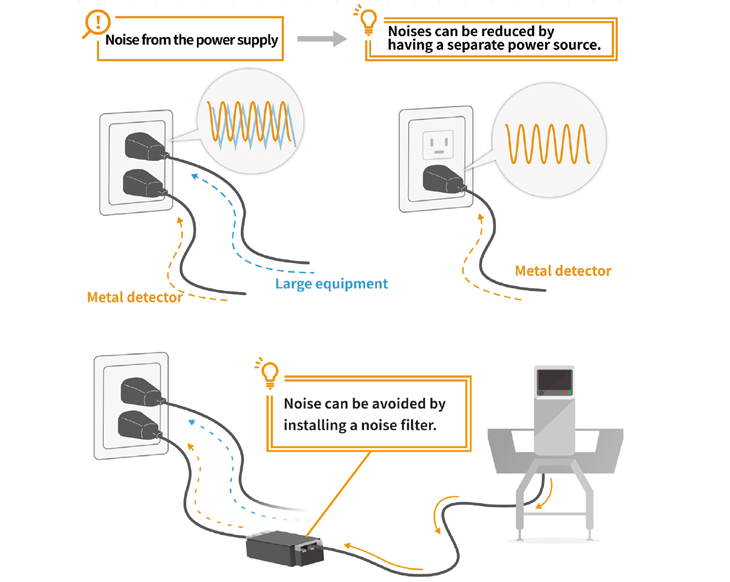
Avoid noise from the ground wire by wiring the power supply separately from devices with large power capacity.
Static noise
Static noise is an adverse effect on metal detectors caused by electrostatic discharge.
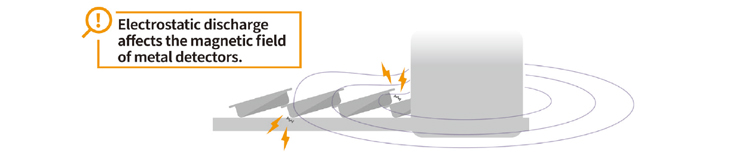
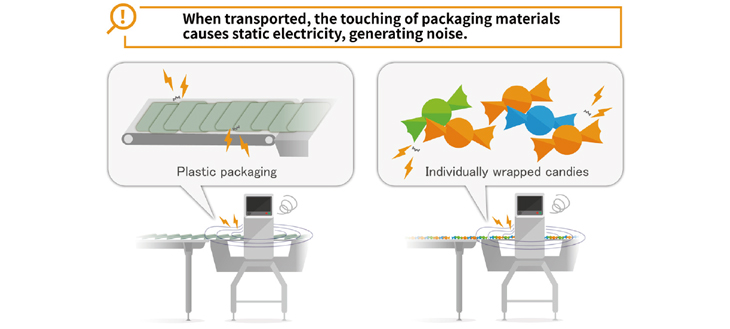
In the case of metal detectors that use a belt conveyance method, the plastic-wrapped items are rubbed on the conveyor, or individually wrapped items are conveyed in contact with each other on the bulk flow line, causing them to become electrostatically charged. If a charged product discharges electricity when it transfers to the metal detector's conveyor belt or near the detector head, it may disturb the magnetic field inside the detector head and cause false rejects.
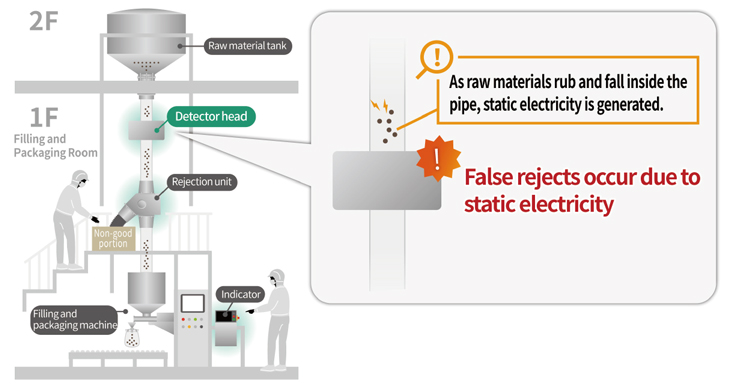
In the case of free-fall transport, where the raw material is inspected at the raw material stage, the raw material passes through the detector head in free-falling. The raw material rubs against the resin chute (pipe) and falls electrically charged, so if the falling object discharges electricity near the detector head, the magnetic field inside the detector head may be disturbed and false rejects may occur.
Countermeasure
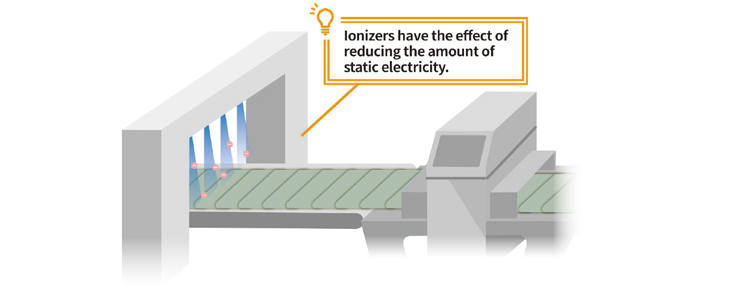
Our belt-conveyed metal detector has a structure that releases static electricity from the belt, rollers, and side plates, but it is difficult to completely eliminate the effects of static electricity discharge. Static eliminators such as ionizers can be expected to reduce the static charge on the inspected product.
In the free-fall system, an antistatic sheet is wrapped around the chute from the upstream equipment to the rejector to reduce noise caused by static electricity.

Conclusion
This paper explained the possibility that electrical noise such as radiated noise, conducted noise, and static electricity noise can cause false rejects by metal detectors. For production line managers, the time it takes to re-inspect and discard a large number of rejected products is a big loss. If sudden false rejects occur frequently, we recommend that you suspect external noise caused by electricity and try the measures introduced above.
Next time, we will introduce noise that is not caused by electricity and countermeasures.
Related Links
PDF >
Technical Note (For general use) >
Products & Solutions > Metal Detection >
Glossary: Metal Detectors >
